
Living within your means sounds simple until people start explaining it badly.
Too often, the advice comes wrapped in punishment. Stop enjoying things. Stop wanting anything. Stop traveling. Stop eating out. Stop buying good tools, comfortable clothes, useful gear, books, hobbies, or anything else that makes life feel richer than a holding pattern between paychecks.
That is not financial maturity.
That is fear with a calculator.
Living within your means does not mean making life smaller than it needs to be. It means refusing to build a life that depends on denial, appearances, constant financial pressure, or the hope that next month will clean up this month’s decisions.
This belongs inside Tenet 4: Financial Maturity because financial maturity is not about worshiping money or proving how cheaply a man can live. It is about using money in a way that protects responsibility, stability, enjoyment, and future choice.
The point is not to stop enjoying life.
The point is to stop allowing enjoyment to become another source of pressure.

The Problem Is Not Pleasure
A mature financial life should have room for pleasure.
That matters because responsibility can become a grim little religion. Every dollar spent on comfort starts to feel suspicious. Every dinner, trip, hobby, or decent purchase has to be defended like evidence in court. The man may look disciplined from the outside while resentment quietly builds inside the household.
A man is allowed to enjoy his life.
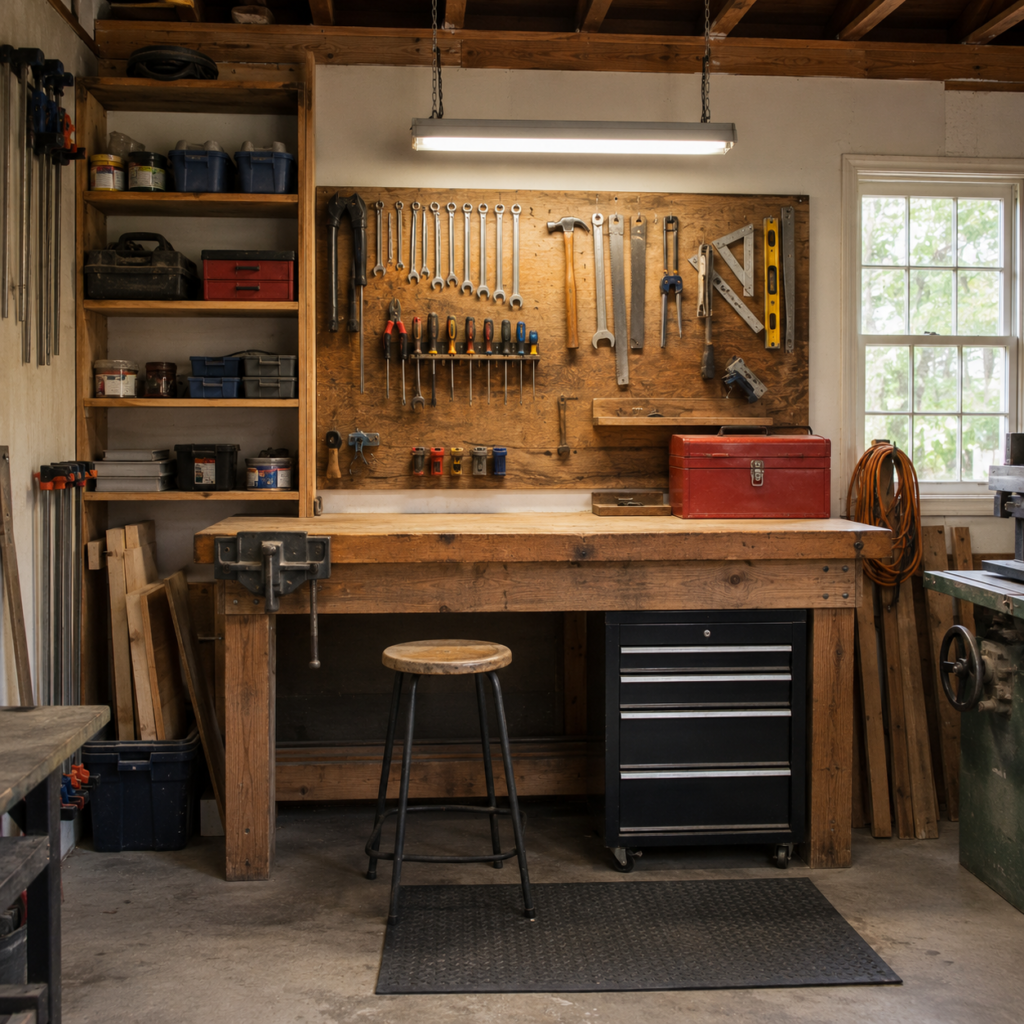
He is allowed to buy the better boots if he will wear them for years. He can take his wife to dinner, save for a trip, build a workshop, own a guitar, cook a good steak, go to a game, or buy the book that helps him think more clearly. He can spend money on things that make life calmer, richer, more useful, or more beautiful.
Financial maturity does not require him to apologize for every pleasure. It asks whether that pleasure fits the life he is actually building.
| Spending that supports life | Spending that creates pressure |
|---|---|
| Chosen deliberately and paid for honestly | Used to escape, impress, numb, or avoid |
| Reflects an actual value or useful priority | Responds mainly to comparison, boredom, or insecurity |
| Fits alongside essential obligations and savings | Requires another part of the household to absorb the cost |
| Leaves satisfaction after the purchase | Creates guilt, secrecy, payments, or the need for another purchase |
| Makes daily life meaningfully better | Mainly makes life more expensive |
The purchase may look identical from the outside. A dinner can strengthen a relationship or become another expensive escape from a life nobody wants to discuss. A tool can support useful work or become a shiny substitute for doing the work. A trip can deepen family life or become a financed performance of happiness.
The difference is not always the item.
The difference is the purpose, the timing, and the pressure that follows.
Comfort Can Quietly Become the Baseline
Comfort is not the enemy.
Unexamined comfort is.
A man can get used to almost anything if it enters his life gradually enough. A payment here. A subscription there. A slightly nicer vehicle. More food delivered instead of cooked. More convenience treated as necessity. More purchases justified because the week was difficult and he felt he had earned some relief.
None of those decisions may be destructive by itself.
The trouble begins when comfort becomes the minimum acceptable standard. Once that happens, anything less feels like loss, even when the old version of life worked perfectly well.
Lifestyle creep steals the benefit of progress
A raise should create more stability, more opportunity, or more room to breathe. Instead, it often disappears into a more expensive version of normal.
The vehicle improves. The subscriptions multiply. The food gets easier. The trips become more elaborate. The house collects upgrades. The man earns more but controls no more of his income because every increase has already been assigned a new job.
Lifestyle creep is a polite phrase for what happened.
The man did not build more freedom.
He built more maintenance.
Convenience becomes expensive when it becomes required
Convenience can be valuable. Paying to save time may be one of the wiser uses of money when that time protects health, work, family, or needed rest.
But convenience becomes dangerous when a household can no longer function without buying relief from every ordinary inconvenience. Cooking feels impossible. Repairing feels unreasonable. Waiting feels intolerable. A slightly difficult task becomes justification for another service, upgrade, delivery charge, or replacement.
Living within your means does not require doing everything the hardest possible way. It requires noticing when helpful convenience has turned into permanent dependence.
Living within your means is not about spending as little as possible. It is about refusing to make ordinary happiness depend on constant financial pressure.
Quality and Status Are Not the Same
Buying quality is not the same as chasing status.
A good tool that lasts ten years may cost less than three poor ones. A reliable vehicle may be wiser than a cheaper vehicle that repeatedly fails at the wrong time. A durable jacket, comfortable mattress, supportive chair, or well-built appliance may serve daily life long enough to justify the price.
Cheap is not automatically responsible.
Expensive is not automatically foolish.
The problem begins when quality becomes the respectable word used to smuggle in vanity.
A man may say he wants reliability when he really wants image. He may say he respects craftsmanship when he really wants recognition. He may call something an investment when what he actually wants is to feel successful for an afternoon.
Most men have done some version of this. The issue is not that men are uniquely vain. The issue is that people are remarkably skilled at giving noble explanations to emotional spending.
| Question | Quality purchase | Status purchase |
|---|---|---|
| What does it improve? | Durability, safety, usefulness, comfort, or daily function | Appearance, comparison, recognition, or temporary self-image |
| Why this version? | The added cost provides a specific practical benefit | The added cost mainly changes how the purchase looks to others |
| What happens afterward? | The item is used, maintained, and valued over time | The satisfaction fades quickly or requires continued upgrading |
| Does it fit? | It can be purchased without weakening more important priorities | The household must carry pressure so the image can be maintained |
A mature man can buy the good thing when the good thing genuinely serves his life. He can also admit when he is trying to buy a feeling, a persona, or an escape from dissatisfaction.
That admission is not shameful.
It is the point where spending becomes conscious again.
Small Living Is Not the Goal
There is a version of frugality that becomes its own form of fear.
The man never spends, rests, celebrates, replaces what needs replacing, invests in his health, or pays for anything that would genuinely improve daily life. He keeps postponing the trip, the dental work, the dependable equipment, the family experience, or the repair that would remove a constant source of strain.
He tells himself he is being responsible.
Sometimes he is simply scared.
A cramped life can be built through overspending, but it can also be built by refusing to spend where spending is appropriate. A man who hoards every dollar from fear may technically be living within his means while still being controlled by money.
Financial maturity is not cheapness.
It is alignment.
The goal is to spend in ways that support the life being intentionally built. Sometimes that means buying the better version. Sometimes it means saving for a trip rather than pretending the trip does not matter. Sometimes it means paying for help, protecting health, reducing strain, or creating time with people who matter.
Other times it means keeping the old car, delaying the renovation, buying used, repairing instead of replacing, or walking away from an upgrade that mainly serves ego.
The mature question is not, “How do I spend the least?”
It is, “Does this use of money serve the life I claim to value?”
Appearances Are Expensive
A life built around appearances requires constant payment.
There is always a nicer vehicle, a larger home, a better trip, a sharper wardrobe, newer gear, a more impressive restaurant, and another version of success to perform. The game never ends because the standard keeps moving, and much of the audience was never paying attention in the first place.
A man may begin by wanting to provide well for his family. That is honorable. He wants them to feel safe, comfortable, and cared for. That is honorable too.
But security can gradually become confused with display.
The line between “I want my family to have a good life” and “I do not want anyone to think we are struggling” can become very thin. The house has to look a certain way. The vehicle has to signal a certain level. Trips, holidays, activities, gifts, clothes, and photographs all begin participating in a story about who the family is supposed to be.
Meanwhile, the man carrying the financial pressure may be the only person who knows how fragile the story has become.
Living within your means is partly the courage to disappoint imaginary observers.
Some people may notice the simpler car, house, trip, or purchase. Most will not. Either way, they are not responsible for funding the future.
Restraint Is a Form of Self-Possession
Restraint is often mistaken for lack.
A man says no to a purchase, and some part of him worries that he is admitting defeat. He keeps the older vehicle, and a childish voice says he has not made it. He chooses the simpler vacation, delays the project, cooks at home, or walks away from a payment that would stretch the household too far.
From the outside, those choices may look smaller.
Internally, they may be evidence of strength.
There is a difference between being unable to buy something and being unwilling to buy it on terms that weaken the rest of life. There is a difference between lacking ambition and refusing to confuse ambition with consumption. There is a difference between settling and choosing stability on purpose.
A mature man does not need every desire to become a purchase order.
He can want something and wait. He can admire something and pass. He can decide, “Not now,” without turning that into “Never.” He can save deliberately and enjoy the purchase later without the enjoyment being followed by months or years of pressure.
That kind of restraint is not small living.
It is self-possession.
The Household Needs a Shared Reality
Living within your means becomes harder when the household is not operating from the same reality.
One person may be worried while the other remains vague. One may track every bill while the other treats money as an unpleasant topic best avoided. One may want security while the other wants immediate relief. One may use spending to express love while the other experiences that spending as danger.
Those tensions do not automatically mean one person is responsible and the other is reckless. They do mean the household needs language honest enough to hold both the numbers and the values underneath them.
Money conversations fail when they become accusations. They also fail when they are avoided until truth can only arrive as an explosion.
A shared reality includes five questions
- What must the household protect? Housing, food, transportation, health, insurance, debt obligations, and basic stability come first.
- What genuinely improves life? Identify the experiences, comforts, tools, and priorities worth funding intentionally.
- What pressure is already being carried? Name debt, irregular income, expected repairs, family obligations, and other risks without softening the numbers.
- What future is being built? Current spending should not quietly fund a life that contradicts the household’s stated goals.
- What are we pretending not to know? The avoided truth is often the most expensive part of the conversation.
The goal is not to turn every evening into a budget meeting. Nobody wants to live inside a committee agenda with throw pillows.
The goal is shared reality.
Without it, one person often becomes the silent carrier of financial stress while the other becomes the protected passenger. That may preserve peace temporarily, but it is not partnership. It is deferred conflict.
“We cannot afford that” may sound like rejection.
“That does not fit what we are building right now” gives the boundary a purpose.
Build Margin, Not Misery
A financially mature life does not need to look impressive.
It needs enough margin to absorb normal trouble.
Margin is the space between income and lifestyle, between desire and purchase, and between comfort and obligation. It is what allows a tire replacement to remain annoying instead of catastrophic. It allows a missed workday to remain inconvenient instead of terrifying. It creates room to help family, handle a repair, rest when needed, or say no to an obligation that would weaken the household.
This connects directly to Emergency Funds Are Not Paranoia. An emergency fund is stored margin. Living within your means is what creates and protects that margin month after month.
Many men do not need a more elaborate financial system. They need more room.
That may require earning more. It may require spending less. At different stages, it may require both. But a household that consumes every increase in income will remain fragile regardless of how respectable the income appears.
Living within your means is not about proving discipline.
It is about making life less vulnerable to predictable expenses and ordinary bad timing.
Wanting More Is Not the Problem
A man does not need to kill ambition to live within his means.
Wanting more time, freedom, travel, better work, a stronger home, more comfort, greater security, or the ability to help his children does not make him greedy. It may mean he is paying attention to the life he has and the life he still wants to build.
The problem is wanting more without allowing that desire to affect present behavior.
A man may want a business, a major trip, a more flexible work life, an improved home, earlier retirement, or enough financial strength to support family without drowning himself. Those can be legitimate goals.
But when current spending funds a completely different future, the goal becomes decorative.
The Difference Between a Financial Goal and a Financial Fantasy addresses that boundary. A goal changes what a man does with today’s money. A fantasy mainly changes how he feels while imagining tomorrow.
The point is not to dream smaller.
The point is to make the dream honest enough to be built.
Define Enough Before Someone Else Does
Enough is one of the hardest financial words because it cannot be answered with math alone.
Some men never have enough because comparison keeps moving the line. Some accept too little because they are afraid to want anything. Some use enough as an excuse to stop growing. Others use more as an excuse to avoid deciding what actually matters.
Enough does not mean life never improves. It does not mean ambition ends or a man must accept a life that feels cramped and half-built.
It does mean there are limits.
Not every desire receives funding. Not every upgrade deserves priority. Not every new income dollar has to produce a more expensive lifestyle. A man can appreciate what he has without pretending he has no remaining goals.
A man with no working definition of enough will always be easy to sell to.
Advertisers, lenders, platforms, and algorithms are all willing to define enough for him. Their version will usually require another purchase, another upgrade, and another reason to feel slightly behind.
Enough is not laziness.
Enough is a boundary that keeps appetite, comparison, and outside pressure from writing the entire financial plan.
A Practical Starting Point
Start by separating spending into three broad categories.
| Category | What belongs here | What to do |
|---|---|---|
| Sustains the household | Housing, food, utilities, transportation, insurance, medical needs, debt payments, and basic obligations | Protect these first and understand their true monthly cost |
| Genuinely enriches life | Relationships, meaningful travel, health, learning, useful tools, hobbies, reflection, and experiences that support real values | Fund these deliberately instead of treating all enjoyment as irresponsible |
| Mostly serves impulse or image | Convenience, boredom, comparison, status, exhaustion, sales pressure, unused subscriptions, and repeated emotional spending | Reduce these first because they consume margin without building much of lasting value |
Do not make this more complicated than it needs to be.
The third category is not proof of bad character. Sometimes the spending is simply unconscious: tired spending, convenience spending, status spending, sale spending, subscription spending, “I deserve it” spending, or “it was only twenty dollars” spending repeated often enough to become real money.
The goal is not to eliminate every imperfect purchase.
The goal is to stop being asleep.
Once a man can see these categories clearly, he can cut what matters least, protect what matters most, and build margin without turning life into a punishment.
Living Well Without Performing Success
There is a quiet strength in building a life that does not require constant performance.
A life where the bills are not always a surprise. A life where pleasures are chosen rather than escaped into. A life where the older vehicle does not feel like humiliation, the simpler trip does not feel like failure, and a delayed purchase does not feel like defeat.
A life where money supports values instead of constantly trying to repair insecurity.
That kind of life may not impress everyone.
That is fine.
The goal is not to look free.
The goal is to become less owned.
Living within your means is not about shrinking life until nothing good remains. It is about removing the financial noise that keeps drowning out the good things already there. It means choosing stability without surrendering joy, restraint without bitterness, and ambition without allowing appetite to write the plan.
Financial maturity is not a war against pleasure.
It is the discipline to enjoy life without making the future pay interest on every passing mood.
Continue Through Financial Maturity
This page supports Tenet 4: Financial Maturity, the principle of using money to protect responsibility, stability, and future choice without turning wealth into a measure of human worth.
- How Debt Quietly Reduces a Man’s Freedom explains how existing obligations claim future income and narrow practical choices.
- Emergency Funds Are Not Paranoia explains how a basic financial buffer protects decisions from panic and ordinary bad timing.
- The Difference Between a Financial Goal and a Financial Fantasy shows how future hopes become plans through numbers, deadlines, and tradeoffs.
All Tenets: 15 Tenets for Positive Masculinity