
The Discipline of Proportion
Strength is so much more than how much a man can lift or how fast he can run.
That is only the surface of strength.
Physical strength matters. A man should care about the body he lives in. He should build as much fitness, mobility, endurance, and capability as his age, health, injuries, and season of life allow. But strength does not stop at the gym door.
Strength is also how well a man holds up under the small pressures of ordinary life. The traffic. The bills. The difficult conversation. The medical appointment. The tired morning. The family tension. The work problem that lands at 4:47 p.m. because apparently chaos has office hours.
Strength is how much he can give when giving is hard.
It is how well he makes decisions in the heat of an argument.
It is whether he can stay honest when lying would be easier, calm when anger wants the wheel, generous when he feels depleted, and disciplined when comfort starts making a very persuasive case.
It is whether he can provide without becoming bitter, save without becoming afraid to live, train without punishing himself, lead without controlling, protect without smothering, and love without keeping score.
Strength is all of these things and more.
That is why balance matters.
Strength Through Balance is not mainly a fitness tenet, although fitness belongs here. It is a whole-life tenet. It is about keeping a man’s physical, mental, emotional, spiritual, relational, and financial life in proportion so one part does not consume the others.
Pay too much attention to one area, and the neglected areas begin to suffer.
Ignore one area completely, and eventually the weakness spreads.
A man can be financially disciplined and emotionally unavailable. He can be physically fit and spiritually hollow. He can be responsible at work and absent at home. He can be calm in public and quietly starving inside. He can be generous to everyone else and cruel to his own body. He can be disciplined in his routine and reckless in his relationships.
That is not strength through balance.
That is uneven strength creating hidden damage.
A good thing can ruin a man when he lets it grow beyond its proper size.
Fitness can become vanity or fear of aging. Discipline can become punishment. Saving can become a locked door. Work can become the only mirror. Responsibility can become resentment. Emotional control can become starvation. Ambition can become endless hunger. Protection can become control. Independence can become loneliness dressed up as self-reliance.
The issue is not that these things are bad.
Most of them are good.
That is what makes them dangerous.
Good things get praised. Good things build identity. Good things make a man feel serious, disciplined, dependable, tough, wise, useful, controlled, generous, principled, or strong. Then one good thing quietly grows too large. It stops serving the life a man is trying to build and starts demanding sacrifice from everything else.
That is where balance matters.
Not balance as weakness.
Not balance as low standards.
Not balance as beige moderation or a polite excuse to avoid hard things.
Balance is the discipline of proportion.
It asks whether a strength is still serving the man’s life, or whether the man has started serving the strength.
That question is the beginning of Tenet 1.

When a Good Thing Becomes a God
This is the heart of Tenet 1.
A good thing becomes dangerous when it stops serving life and starts demanding sacrifice from everything else.
That sounds simple, but it is one of the easiest traps for a man to miss because the thing taking over may actually be good. A man does not usually lose balance because he loves terrible things. Sometimes he does. Plenty of men have been wrecked by obvious foolishness, addiction, cruelty, laziness, dishonesty, rage, ego, lust, greed, and the kind of stupidity that arrives wearing sunglasses indoors.
But Tenet 1 is concerned with a quieter danger.
Good things without boundaries.
Work is good. Saving is good. Fitness is good. Discipline is good. Responsibility is good. Emotional control is good. Independence, protection, ambition, service, pleasure, confidence, and leadership all have their proper place in a healthy life.
The point is not to reject those things.
The point is to keep them good.
That requires boundaries, because good things are powerful enough to take over. Work can support a family, but it can also eat one. Saving can create freedom, but it can also starve a life. Fitness can build capability, but it can also become vanity, fear, or punishment. Responsibility can express love, but it can also turn into martyrdom. Emotional control can create steadiness, but it can also become numbness. Independence can create competence, but it can also become isolation. Protection can guard what matters, but it can also become control.
That is how a strength becomes distorted.
Not all at once.
Slowly.
With compliments.
When a man is praised for a strength, he is tempted to keep feeding it. If people praise him for working hard, he may work until work owns him. If people praise him for being calm, he may hide every honest feeling behind a blank face. If people praise him for being responsible, he may carry too much and call his exhaustion virtue. If people praise him for discipline, he may begin to suspect joy itself.
That is when the good thing starts acting like a god.
It demands time. It demands loyalty. It demands sacrifice. It explains away the damage. It tells the man that anyone who questions it simply does not understand his standards, his pressure, his goals, his duty, or his strength.
This is how a man ends up serving the very thing that was supposed to serve him.
His training no longer supports his life. His life now serves his training.
His saving no longer protects his family. His family now lives under the rule of his financial fear.
His work no longer supports his values. His values have been outsourced to work.
His discipline no longer builds health. His health has become a place where he proves he can suffer.
His responsibility no longer serves love. Love has become the excuse for martyrdom.
His emotional control no longer creates peace. Peace has been purchased by making himself unreachable.
That is the reversal Tenet 1 is trying to catch.
Not after the whole thing burns down.
Earlier.
Before the virtue becomes a cage. Before the good habit becomes an identity. Before the man becomes proud of the very thing that is narrowing his life.
A balanced man does not weaken every strong trait until nothing remains. He governs strong traits so they do not become tyrants. He does not abandon discipline, responsibility, fitness, saving, work, ambition, independence, protection, or emotional control. He puts them back in their proper place.
Strength Through Balance is not asking men to weaken the good things.
It is asking men to keep them good.
The central question is simple:
Who is serving whom?
If the good thing is making a man more capable, more grounded, more honest, more useful, more connected, and more alive, it is probably still in its proper place.
If it is making him rigid, resentful, fearful, unreachable, hollow, controlling, joyless, or unable to receive correction, it needs examination.
A good thing becomes a god when the service reverses.
Read the anchor support page here: When a Good Thing Becomes a God
Physical Fitness: Train for the Life You Actually Live
A man should be physically capable.
That does not mean every man needs to become a competitive athlete, gym creature, marathon runner, obstacle-course addict, or shirtless motivational quote with knees. It means the body matters because life is physical whether a man likes it or not.
Life asks a man to walk, carry, lift, bend, climb, reach, brace, recover, sleep, drive, work, travel, help, and keep going through long ordinary days. It asks him to carry groceries, move furniture, climb stairs, get off the floor, handle yard work, take a suitcase through an airport, help someone else, and sometimes play with a child or grandchild without making the next morning a medical subplot.
Training should serve that life.
A strong man should develop strength, endurance, mobility, balance, coordination, and recovery. Not because he needs to impress strangers, but because capability protects freedom. A body that can move well gives a man more options. A body that is neglected eventually narrows the life around it.
This is especially true as a man gets older. The body from twenty-five is not coming back to clock in for duty. The body he has now is the one that needs leadership. That means training with honesty, not nostalgia. It means respecting injuries, warming up, walking more, lifting appropriately, improving mobility, paying attention to blood pressure and medical numbers, and refusing to treat pain like proof of character.
Training hard can be good.
Training stupid is still stupid.
A balanced man trains to become more useful, more durable, and more available for the life he claims matters. He does not turn the gym into a church where every missed workout becomes sin and every mirror becomes judgment.
For the deeper physical side of this Tenet, read Train for the Life You Actually Live. This also connects naturally to the broader Health & Fitness section.
Food: Eat for Strength, Not Punishment
Food is one of the first places balance gets tested.
A man should care about what he eats. That does not require obsession. It requires enough honesty to admit that the body cannot run forever on stress, drive-through decisions, late-night grazing, office snacks, beer math, and the vague belief that “I’ll clean it up Monday” has magical properties.
Eating well matters.
It affects energy, weight, sleep, blood pressure, mood, focus, hormones, inflammation, digestion, confidence, and how a man feels inside the body he has to carry all day. Pretending food does not matter is not freedom. It is avoidance with a fork.
But food can also become punishment.
A man decides to eat better, which is good. Then he removes every meal he enjoys, treats flavor like weakness, turns bread into a moral enemy, and starts acting like every normal human pleasure is evidence that he lacks discipline. Dinner becomes math, guilt, and sadness arranged on a plate.
That is not strength.
That is self-contempt with seasoning removed.
A balanced man eats in a way that supports the life he wants to live. He can reduce junk without becoming joyless. He can lose weight without hating himself. He can enjoy a meal without turning it into a moral collapse. He can eat vegetables without announcing it like he just returned from war. He can enjoy birthday cake and still return to the pattern.
The point is not indulgence.
The point is sustainability.
A diet a man hates may work briefly. Then it usually breaks, or worse, it succeeds while making him unbearable. Better food should make life stronger, not smaller.
If weight, aging, and hormones are part of the issue, the practical support page Weight Loss, Hormones, and the Reality of Getting Older is a better place to go deeper.
Sleep and Recovery: Maintenance Is Not Weakness
Some men treat sleep like an optional hobby.
They will maintain a truck, sharpen a blade, update software, check tire pressure, change oil, and argue about which tool brand is best with the seriousness of a constitutional scholar. Then they run their own body on five hours of sleep, caffeine, irritation, and stubbornness.
That is not toughness.
That is bad maintenance.
Sleep is part of strength because recovery is where the body and mind repair. Poor sleep makes almost everything worse. Mood gets worse. Decision-making gets worse. Food choices get worse. Training recovery gets worse. Patience gets worse. Blood pressure, stress, appetite, focus, and emotional control all start sending complaints.
A tired man is often not his best self.
He may still function. Many men function for years while exhausted. Functioning is not the same as thriving. Functioning can also become a trap because it lets a man keep pretending the system is working long after the warning lights are on.
Rest is not laziness when it restores capacity.
Recovery is not weakness when it keeps strength available.
A balanced man does not rest because he lacks discipline. He rests because he has enough discipline not to destroy the equipment. He knows that training, working, leading, serving, and caring all require fuel. He understands that constant depletion does not make him noble. It makes him more likely to become sharp, foggy, resentful, reactive, sick, or injured.
The body will eventually collect what pride refuses to pay.
Better to pay on purpose.

Mental Fitness: Strength of Mind
A strong body means little if the mind is fragile.
Mental fitness is not pretending nothing bothers you. It is not silent suffering. It is not walking through life with clenched teeth and calling every unprocessed fear “discipline.”
Mental fitness is resilience paired with awareness.
It is the ability to stay clear under pressure, adapt when conditions change, learn when old methods stop working, keep perspective when the situation feels urgent, and ask for help before a problem grows teeth.
A mentally fit man can face hard things without becoming hard in every direction. He can make decisions when he is tired. He can admit uncertainty without collapsing. He can revise his thinking without treating correction like humiliation. He can hold values without becoming rigid. He can stay disciplined when motivation fades, but he also knows when discipline has crossed into self-punishment.
That last distinction matters.
A man can become so proud of doing hard things that he forgets hard is not the same as wise.
Sometimes the hard thing is getting up early.
Sometimes the hard thing is going to bed.
Sometimes the hard thing is grinding through the task.
Sometimes the hard thing is admitting the grind has become an excuse to avoid the life around it.
Mental strength is not a permanent clenched fist. It is the ability to respond proportionally to reality.
If everything is a battle, the man may not be strong. He may simply be trapped in a war he keeps recreating.
Discipline Without Joy Becomes Punishment
Discipline matters.
A man without discipline gets dragged around by mood, appetite, fear, fatigue, convenience, ego, comfort, and whatever glowing screen is currently farming his attention.
Discipline helps a man do what matters when he does not feel like doing it. It helps him train, save, show up, tell the truth, follow through, repair damage, and keep promises when motivation has left the building and stolen the good snacks.
But discipline can mutate.
A man can start by trying to improve his life and end by proving he can endure a joyless one.
That is not strength.
That is misery with a schedule.
This shows up in dieting, training, saving, work, productivity, routines, alcohol, screens, rest, and even personal development. A man builds rules. Some rules help. Then the rules become identity. Every pleasure becomes suspect. Every rest becomes guilt. Every missed target becomes a moral trial. Every bite, dollar, hour, and decision gets audited by a miserable little accountant in the basement of the soul.
Discipline should make a man more capable, more grounded, more useful, and more alive. If it only makes him colder, harsher, smaller, and harder to live with, it may not be discipline anymore.
It may be punishment wearing boots.
A balanced man does not worship comfort. Comfort is a lousy god too. But he also does not worship suffering.
He eats in a way that supports health and still leaves room for food to be one of life’s decent pleasures. He trains hard without treating pain like proof of virtue. He saves money without turning every small joy into a felony. He works responsibly without disappearing. He rests before collapse becomes the only way his body can get a vote.
Read the full support page here: Discipline Without Joy Is Just Punishment.

Reality Check: Hard is not the enemy. Harsh is different. Hard builds capacity. Harsh feeds contempt.
Money Needs Balance Too
Saving money is wise.
A man should plan. He should understand debt. He should build margin when possible. He should not treat every paycheck like it has to be evacuated before sunset. He should protect future freedom from present impulse.
But saving can also become distorted.
A man can become so focused on future security that he treats the present like a waiting room. Every trip is too expensive. Every family dinner is suspect. Every repair gets delayed. Every hobby needs a defense brief. Every gift feels dangerous. Every meaningful expense stands trial before a spreadsheet that never smiles.
That is not financial maturity.
That is fear with a calculator.
The opposite is not better. Reckless spending is not “living.” Buying every toy, upgrading every gadget, eating out constantly, financing status, and calling impulse “self-care” is not balance. It is leakage with a motivational caption.
Money should serve life.
It should protect the future and honor the present. It should create security, but also memory. It should reduce panic, but also allow generosity, repair, health, time, connection, and the occasional small joy that does not require a committee hearing.
Some opportunities expire.
The trip with your children expires. The weekend with your spouse expires. The dinner with old friends expires. The visit with aging parents expires. The hobby your body can still do expires. The season where a memory could have been made expires.
A man should not use that truth to justify stupidity. But he should let it sober him.
Future security matters.
Present life matters too.
That is why this cluster bridges directly to Tenet 4: Financial Maturity. Tenet 4 handles the deeper money work. Tenet 1 asks whether money has stayed in proportion.
Read the support page here: Save Money Without Forgetting to Live.
Emotional Balance: Control Without Starvation
Emotions are not the enemy.
Uncontrolled emotions are.
A man should be able to pause before reacting. He should be able to feel anger without letting anger drive. He should be able to feel fear without calling it instinct every time. He should be able to feel sadness without turning it into cruelty, withdrawal, or a three-day weather system over the household.
Emotional control matters.
But emotional control can also become distorted.
A man can become so proud of not being ruled by emotion that he slowly loses honest access to himself. He does not rage, but he also does not grieve. He does not panic, but he also does not ask for comfort. He does not cry, but he also does not heal. He does not burden people, but he also does not let anyone actually know him.
That is not always strength.
Sometimes it is emotional starvation.
A balanced man is not a stoic statue. He feels without flooding the room. He controls himself without disappearing from himself. He knows that feelings are information, not orders. He investigates them, names them, tests them, and chooses what to do with them.
This is where Tenet 1 connects directly to Tenet 10: Emotional Intelligence.
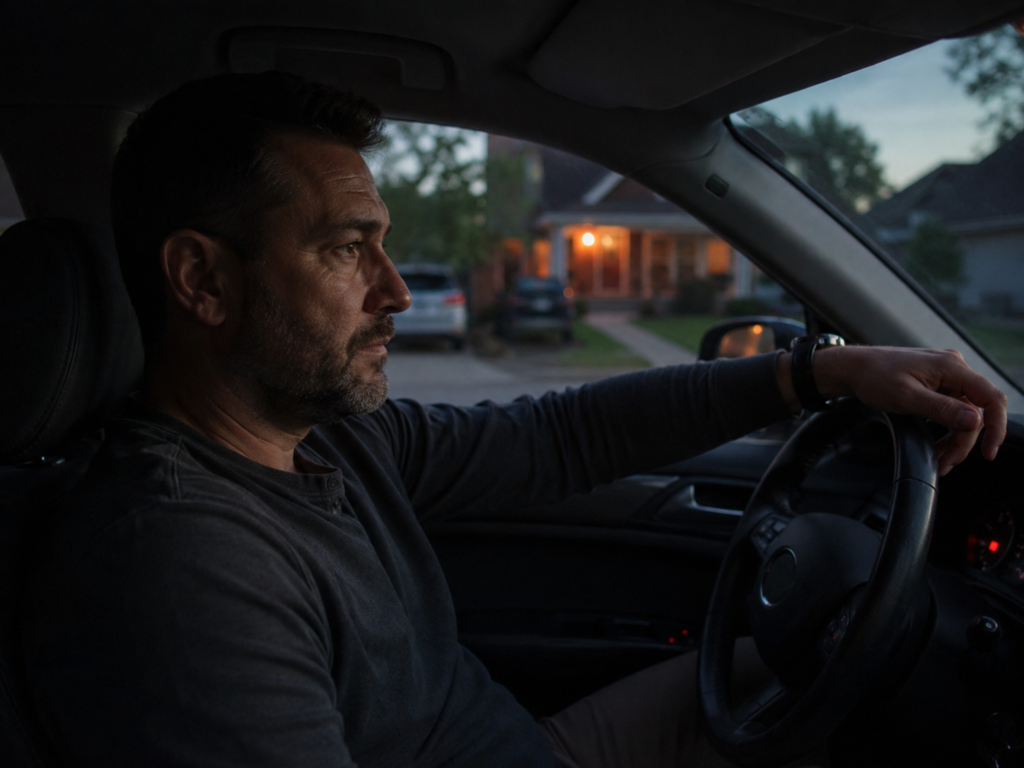
Tenet 1 asks whether emotional control has stayed healthy and proportional. Tenet 10 asks whether a man understands his emotions well enough to use them wisely in real relationships.
The goal is both.
Control and awareness.
Restraint and truth.
Calm and connection.
For the support page, read Emotional Control Without Emotional Starvation.

Responsibility Without Resentment
Responsibility is good.
A man should keep his word. He should show up. He should care for his people. He should pay his bills, carry his share, protect what needs protecting, repair what he breaks, and avoid making other people pay for his laziness, avoidance, selfishness, or cowardice.
Responsibility is one of the load-bearing walls of adult life.
But responsibility can become distorted when a man carries too much for too long without honesty.
He says yes when he should pause. He carries what should be shared. He absorbs what should be confronted. He rescues when someone else needs to grow. He refuses to ask for help, then resents people for not helping. He trains everyone to believe he will handle everything, then grows bitter when they believe him.
That is how responsibility becomes resentment.
It may begin with love. It may begin with duty. It may begin with real need. But without balance, the dependable man can become tired, sharp, silent, passive-aggressive, controlling, or quietly furious at the people he claims to serve.
This is not a small issue.
Many men do not break because they avoided responsibility. They break because they accepted too much responsibility without truth, limits, support, or clean communication.
A balanced man still serves. He still carries duty. He still shows up. He still protects, provides, repairs, and helps. But he does not turn himself into a permanent shock absorber for every avoidable crisis in the family, workplace, or community.
He learns to say yes cleanly and no before he hates people.
He asks for help before the load turns poisonous.
He stops confusing martyrdom with love.
Read the full support page here: Responsibility Without Resentment.
Relationships Need Proportion
A man’s relationships reveal whether his strength is balanced.
It is easy to sound strong in theory. It is harder when a partner is hurt, a child is disappointed, a parent is declining, a friend needs help, a coworker pushes a button, or a family system keeps trying to hand him the same role he has outgrown.
Balance in relationships does not mean always being nice.
Sometimes love requires firmness. Sometimes it requires a boundary. Sometimes it requires a hard conversation, an apology, a refusal, a repair, or the humility to admit that the way a man intended something is not the same as how it landed.
A balanced man can stand firm without becoming cruel. He can listen without surrendering his values. He can provide without buying control. He can protect without possessing. He can help without enabling. He can lead without making everyone smaller.
He also knows that relationships need attention before they become emergencies.
A man who gives everything to work, training, saving, hobbies, service, or personal ambition may tell himself he is building a good life. Maybe he is. But if the people closest to him only receive his leftovers, the structure is weaker than it looks.
A good life is not built in one column.
The relational column matters.
Ignore it long enough and the whole building shifts.
Spiritual Balance: More Than Performance
Spiritual life belongs in balance too.
Not every man uses the same language for this. Some men are religious. Some are spiritual but not religious. Some are skeptical but still feel the pull of meaning, conscience, awe, gratitude, silence, mortality, forgiveness, beauty, and the uncomfortable suspicion that life should be about more than appetite and output.
Whatever language a man uses, he needs some relationship with meaning beyond immediate reaction.
Without that, every pressure becomes bigger than it should be. Work becomes identity. Money becomes security. Fitness becomes control. Politics becomes religion. Ego becomes compass. Anger becomes fuel. Comfort becomes purpose. The loudest thing in the room becomes the thing that leads him.
Spiritual balance does not require performance. It does not require pretending certainty. It does not require turning faith into a costume or doubt into a personality. It means a man makes room to ask what kind of life he is becoming, what he owes beyond himself, what he should repair, what he should release, and what he should honor before time makes the decision for him.
This connects naturally to Tenet 3: Spiritual Without the Chains, where that part of the framework gets more space.
A man can be strong, disciplined, and successful while still hollow.
Tenet 1 does not let him ignore that.
Strength Through Balance in Daily Life
Strength shows up in how a man lives.
Not just how he trains. Not just what he says he believes. Not just what he can endure when everyone is watching. The real test is often smaller, quieter, and more annoying than that. It shows up in the ordinary pressures that do not look heroic enough to make a movie but still reveal what kind of man is actually driving the machine.
At work, balance means knowing when to push and when the system is using dependability as free fuel. A man can work hard without disappearing into work so completely that everyone he loves gets the tired leftovers. He can take responsibility without becoming the permanent emergency generator for bad planning, weak systems, and people who keep discovering deadlines as if they were natural disasters.
In relationships, balance means standing firm in values while remaining open enough to listen. It means being strong without becoming controlling, available without becoming consumed, honest without becoming cruel, and loving without turning love into a silent contract. A man can care deeply without making everyone around him responsible for decoding what he refuses to say.
In leadership, balance means confidence without arrogance. It means making decisions, taking responsibility, receiving correction, and building people instead of keeping them dependent so he can feel necessary. A leader who needs everyone smaller than him is not strong. He is insecure with a title.
In fatherhood and family life, balance means teaching through example, not force. It means showing strength without making fear the household language. It means letting children, grandchildren, or younger people see discipline, apology, effort, tenderness, repair, and emotional honesty in a man they can trust.
In money, balance means saving without worshipping fear and spending without worshipping appetite. A man should protect the future, but the present is not a waiting room. He should enjoy life, but enjoyment is not a license to hand future himself a shovel and a mess.
In health, balance means training hard enough to improve and wisely enough to continue. It means caring about food, sleep, strength, endurance, mobility, medical numbers, and recovery without turning the body into either an idol or a neglected piece of equipment in the shed.
In spiritual life, balance means making room for meaning without turning belief, doubt, identity, or certainty into a performance. A man needs some way to ask what kind of life he is becoming, what he owes beyond himself, what he needs to repair, and what he should stop pretending does not matter.
In emotional life, balance means control with a pulse. A man should not be ruled by every feeling, but he should not starve his inner life and call the numbness maturity. He needs enough restraint to be trusted and enough honesty to be known.
This is not complicated in theory.
It is difficult in practice because every man has a favorite imbalance.
Some men overwork. Some overspend. Some over-save. Some overtrain. Some overeat. Some over-control. Some over-serve. Some over-isolate. Some over-explain. Some over-endure. Some turn every good instinct into a bunker and then wonder why life feels narrow.
Tenet 1 asks a man to notice his pattern before the pattern becomes his prison.
Then it asks him to start correcting it.
Practicing Tenet 1
Do not turn this into a whole new self-improvement circus.
You do not need a perfect routine, a motivational notebook, a color-coded tracker, or a solemn declaration that beginning Monday you are becoming an entirely new man with better macros and worse conversation.
You need attention.
Try a few of these each day. Hit each category at least once during the week. Do not make the practice huge. The goal is to keep checking whether the good things in your life are still serving life, or whether they have started quietly demanding too much.
Check one strength for distortion
Pick one good thing in your life and ask whether it has stayed in proportion.
Work. Fitness. Saving. Responsibility. Discipline. Control. Independence. Ambition. Protection. Service. Comfort. Pleasure. Certainty. Pick one.
Ask the uncomfortable question: “Is this still helping me live better, or has it started taking over?”
Do not answer too quickly. The first answer is usually the one your ego already prepared.
Restore one neglected area
Balance does not mean giving every part of life the same amount of time. That is not adulthood. That is fantasy scheduling.
But it does mean noticing what has been ignored too long.
Maybe your body needs movement. Maybe your relationship needs attention. Maybe your sleep needs respect. Maybe your money needs a plan. Maybe your spiritual life has gone silent. Maybe your emotional life has been shoved in a closet while you stay useful for everyone else.
Choose one neglected area and give it a real act of attention.
Not a theory.
An act.
Choose the right form of strength
Not every moment asks for the same kind of strength.
Sometimes strength is pushing harder. Sometimes it is stopping before damage accumulates. Sometimes it is saying yes. Sometimes it is saying no. Sometimes it is carrying the burden. Sometimes it is admitting the burden needs to be shared. Sometimes it is speaking clearly. Sometimes it is shutting up long enough to finally hear what someone is saying.
Before reacting, ask: “What kind of strength does this moment actually require?”
That question can save a man from using a hammer on every lock.
Practice disciplined recovery
Recovery is not weakness.
Pick one recovery act and do it on purpose. Go to bed earlier. Take a walk without turning it into performance. Stretch. Hydrate. Put the phone down. Take the easier workout because your body is asking for sense instead of glory. Sit quietly for ten minutes without pretending scrolling counts as rest.
A man who refuses recovery is not tougher.
He is often just poorly maintained.
Use money with proportion
Do one small money act that restores balance.
Maybe that means not buying the thing. Maybe it means buying the thing because it actually matters. Maybe it means moving money to savings. Maybe it means finally paying for the repair you keep delaying. Maybe it means planning a small experience with someone you love instead of pretending life starts after the accounts look perfect.
Saving and spending both need judgment.
Use one of them wisely this week.
Tell the truth without flooding the room
Emotional control should not mean emotional disappearance.
Tell one clean truth more clearly than usual.
“I am frustrated and need a minute.”
“That bothered me.”
“I am more tired than I have admitted.”
“I need help thinking this through.”
“I was wrong.”
“I have been carrying this badly.”
Do not turn it into a dramatic confession scene. No soundtrack required. Just say something true before it hardens into distance, sarcasm, resentment, or silence.
Carry one responsibility cleanly
Choose one responsibility and handle it without resentment, avoidance, or theatrical suffering.
Do the task. Make the call. Fix the thing. Pay the bill. Have the conversation. Show up.
But also notice whether the responsibility is yours, shared, delegated, or something you keep picking up because being needed protects your identity.
Responsibility is good.
Resentful responsibility needs inspection.
Make one good thing human again
This is the core practice.
Take one good thing that has become too rigid and make it human again.
Eat the healthy meal, but make it enjoyable.
Train, but do not punish the body.
Save, but do not make the present beg for permission to exist.
Work hard, but come home with something left.
Lead, but let someone else grow.
Protect, but do not control.
Stay calm, but do not disappear.
That is Strength Through Balance in motion.
Practical Standard: Do a few of these most days. Hit each category at least once a week. Keep the practice small enough to repeat and honest enough to matter. A good thing should make you more capable, more grounded, more useful, more connected, and more alive. If it makes you rigid, resentful, fearful, unreachable, or hollow, examine it.
Strength That Lasts
Strength is not being unbreakable.
Nothing human is unbreakable. The men who pretend otherwise often become brittle, isolated, or quietly damaged behind a competent face. They may keep moving for a long time, but movement is not the same as health. Functioning is not the same as wholeness.
Strength that lasts is adaptable.
It can push, but it can also recover. It can stand firm, but it can also listen. It can carry real responsibility, but it knows the difference between duty and martyrdom. It can save for the future without treating the present like a waiting room. It can control emotion without starving the inner life. It can train the body without turning fitness into a shrine.
That kind of strength does not look the same in every season.
A young man may need to learn discipline, restraint, and responsibility. A middle-aged man may need to learn limits, recovery, and honest recalibration. An older man may need to learn how to remain useful without pretending he is still in the same body, the same role, or the same season of life.
The principle stays the same.
Strength needs proportion.
That is why Tenet 1 belongs at the front of the framework. Every other Tenet depends on this one. Integrity needs balance, or it becomes self-righteousness. Spirituality needs balance, or it becomes performance. Financial maturity needs balance, or it becomes fear. Family first needs balance, or it becomes control or self-erasure. Community service needs balance, or it becomes burnout. Emotional intelligence needs balance, or it becomes either chaos or numbness. Lifelong learning needs balance, or it becomes credential-chasing or endless self-improvement theater. Legacy needs balance, or it becomes ego trying to survive death with a better logo.
A balanced man is not strong because he never struggles.
He is strong because he can move through struggle without losing himself.
That is strength that lasts.
A Better Standard
A man should be strong, but strength has to remain connected to the life it is supposed to serve.
That is the standard.
Not strength in only one direction. Not discipline so severe that joy dies. Not responsibility so heavy that resentment takes root. Not fitness so consuming that life becomes a servant of training. Not financial caution so tight that every meaningful use of money feels dangerous. Not emotional control so complete that nobody can reach him. Not independence so rigid that help feels like humiliation.
Strength through balance is not a retreat from masculinity.
It is masculinity under better command.
A balanced man does not reject hard things. He trains, works, saves, protects, leads, sacrifices, and carries responsibility. He accepts that life will require effort, restraint, discomfort, and seasons where the right thing costs more than he wanted to pay.
But he also understands that strength is not measured only by how much pressure he can absorb.
Strength is also knowing what kind of pressure belongs to him. It is knowing when to push and when to recover. When to carry and when to share. When to save and when to spend. When to stand firm and when to soften. When to speak and when to listen. When to endure and when endurance has become avoidance.
That kind of strength is harder than brute force.
It requires judgment.
It requires humility.
It requires a man to stop worshipping the one form of strength that makes him feel safest and start paying attention to the whole life he is building.
That is where this framework begins.
A man should stay strong enough to act, steady enough to decide, honest enough to adjust, and wise enough to remain human while doing it.
The Tenet 1 Support Pages
These pages expand the practical side of Strength Through Balance.
When a Good Thing Becomes a God
The anchor argument for this Tenet. A good thing becomes dangerous when it stops serving life and starts demanding sacrifice from everything else.
Discipline Without Joy Is Just Punishment
For men who confuse misery with virtue and need to rebuild discipline that is strong enough to last and human enough to live with.
Save Money Without Forgetting to Live
For men who need financial discipline without turning the present into a waiting room. This connects directly to Tenet 4: Financial Maturity.
Train for the Life You Actually Live
For men who want strength, endurance, mobility, recovery, and capability that support real life, not just gym numbers. This connects to Health & Fitness.
Responsibility Without Resentment
For men who carry too much, say yes too often, and need responsibility with truth, limits, and less silent bitterness.
Emotional Control Without Emotional Starvation
For men who need restraint without numbness, steadiness without distance, and control without disappearing from themselves. This connects directly to Tenet 10: Emotional Intelligence.
Continue Through the 15 Tenets
All Tenets: 15 Tenets for Positive Masculinity
Next Tenet: Tenet 2 – Life Rooted in Integrity