
Reading does not need to make a man look smarter.
It does not need to turn every evening into self-improvement homework. It does not need to be nonfiction, serious, masculine, difficult, classic, productive, or impressive.
Sometimes reading teaches. Sometimes it gives a man somewhere else to go for a while. Sometimes it lets him laugh when life has been too heavy. Sometimes it puts him inside a life he never would have understood from the outside.
Sometimes it is a mystery, a thriller, a ridiculous fantasy quest, a medieval romance, a science fiction world, a biography, a poem, or a book about dragons, detectives, starships, monks, soldiers, fools, lovers, cowards, fathers, monsters, and people trying to survive the mess they made.
Good.
A man who only reads to become more useful may still become narrower than he realizes. Reading should help him grow, yes. But growth is not always instruction. Sometimes growth looks like imagination, delight, grief, empathy, rest, and wonder.
This page is part of Tenet 11: Lifelong Learning, because lifelong learning is not just collecting information. It is staying open to life.
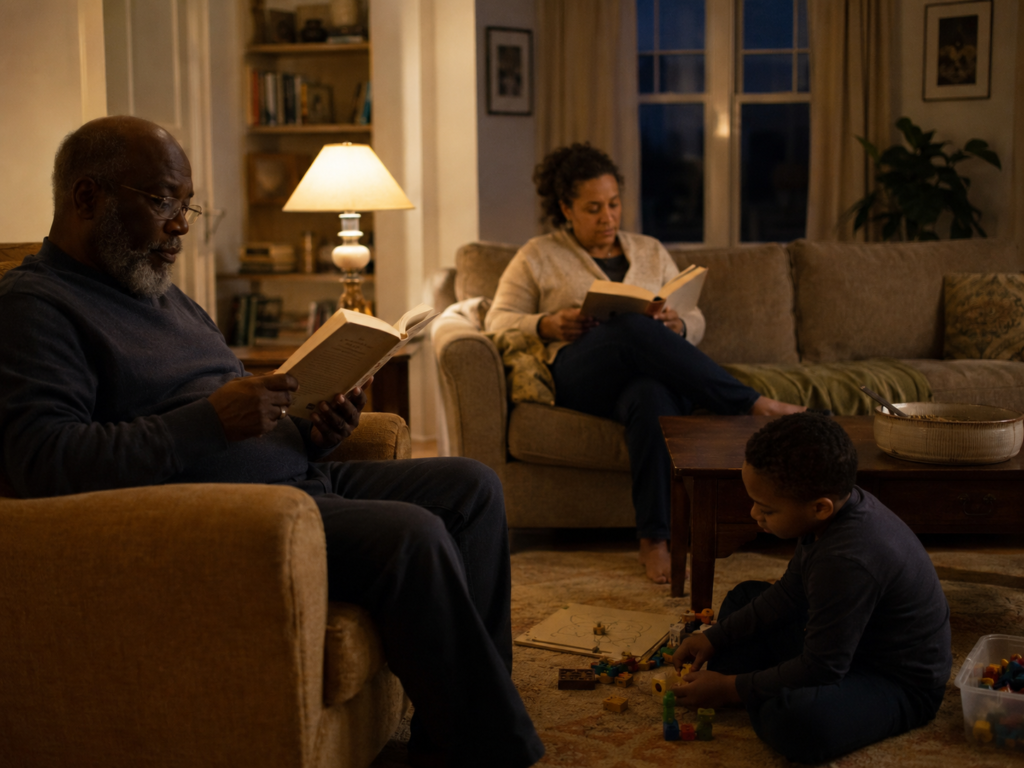
Reading Is Not Just Self-Improvement
There is nothing wrong with reading to improve yourself.
A man can read to understand money, health, work, history, leadership, communication, aging, discipline, faith, marriage, fatherhood, grief, technology, or any other part of life that keeps asking for better judgment.
That kind of reading matters.
But it is not the only kind that matters.
Some men turn reading into another productivity contest. Every book has to build a skill, sharpen a system, increase income, optimize a habit, or make them sound more serious. That approach can become sterile.
A man is not a machine being upgraded.
He is a human being trying to live a full life without becoming smaller, colder, duller, or more trapped inside his own narrow experience. Reading can help with that, not just by giving him answers.
Sometimes by giving him range.
Reality Check: A book does not have to improve your résumé, sharpen your productivity system, or make you sound clever at dinner to be worth reading.
Read toward a changed life
Books are not trophies and reading is not an identity. The useful question is what you understand, test, remember, and practice after the cover closes.
Fiction Is Not Wasted Time
Some men dismiss fiction as entertainment only.
That is a mistake.
A good novel can take a man somewhere his own life will never take him. It can put him inside another person’s fear, love, pride, cowardice, loyalty, grief, temptation, humor, or regret.
It can show him consequences without making him pay for them directly. It can let him experience courage without a speech about courage. It can make him understand loneliness, sacrifice, betrayal, desire, aging, ambition, failure, and hope in ways a bullet-pointed nonfiction book never will.
And yes, genre fiction counts.
- Mysteries count.
- Thrillers count.
- Science fiction counts.
- Fantasy counts.
- Romance counts.
- Historical fiction counts.
- Comedy counts.
- Adventure counts.
- Weird books count.
A book does not have to wear a tweed jacket and look disappointed in you to be worthwhile.
Sometimes the book that keeps a man reading is the book with monsters, detectives, starships, quests, sword fights, impossible worlds, bad jokes, damaged heroes, or absurd adventures that somehow say something true anyway.
That is not lesser reading.
That is reading.
Pleasure Is a Valid Reason to Read
A man is allowed to enjoy a book.
That should not need defending, but here we are.
Not every book needs to become a lesson plan. Not every chapter needs a highlighted insight. Not every story has to justify itself by making the reader more disciplined, productive, or marketable.
Sometimes the value is that you enjoyed it.
You relaxed. You laughed. You wanted to know what happened next. You forgot the noise for a while. You remembered that imagination still works. You gave your mind something better than another hour of scrolling, outrage, worry, or background television.
That matters.
Pleasure is not automatically shallow. A man who has forgotten how to enjoy anything without turning it into achievement has not become mature. He has become efficient in a very sad way.
Reading for pleasure can be a quiet rebellion against becoming joyless.
Reading Gives a Man Somewhere Else to Go
Life can get heavy.
Work pressure. Money pressure. Aging parents. Adult children. Marriage strain. Health concerns. Loss. Boredom. Regret. Exhaustion. The low-grade noise of a world that never seems to shut up.
A book can give a man somewhere else to go.
Not as permanent escape. Not as avoidance of responsibility. Not as a way to disappear from people who need him.
But as restoration.
A good story can create a little room inside the mind. A biography can remind him that other people have endured hard things. A poem can say in twelve lines what he has carried for twelve years. A strange fantasy novel can give him enough distance from his own life to return to it with a little more air in his chest.
That is useful.
Not everything useful looks practical. Sometimes a man needs rest before he can act wisely.
Reading Expands the Size of Your Life
Every man lives one life directly.
Reading lets him borrow more.
He can live inside another century, another country, another class, another war, another marriage, another failure, another kind of courage, another kind of foolishness, another kind of love, and another kind of loss.
That expansion matters because men can become trapped inside their own stories. Their own work. Their own politics. Their own pain. Their own routines. Their own assumptions. Their own generation. Their own grievances.
Reading pushes against that enclosure.
It reminds a man that his life is real, but it is not the only reality. His pain is real, but it is not the only pain. His wisdom is real, but it is not the only wisdom. His way of seeing the world is shaped by where he has been, who raised him, what hurt him, what rewarded him, and what he has avoided.
A wider reading life makes it harder to become a narrow man.
Read Across the Range
A man does not need to read only one kind of book.
Different books feed different parts of life.
- Nonfiction can teach tools, history, systems, habits, and perspective.
- Biography can show how real lives bend under ambition, failure, courage, luck, ego, and consequence.
- History can remind a man that his current moment is not the first time humans have been foolish, brave, cruel, generous, or convinced the world is ending by Thursday.
- Fiction can expand imagination and emotional range.
- Mystery can sharpen attention.
- Science fiction can stretch possibility.
- Fantasy can recover wonder.
- Comedy can keep a man from taking himself too seriously.
- Poetry can reconnect language to feeling.
- Essays can provoke thought without asking for a lifetime commitment.
- Comfort books can give the mind a familiar place to rest.
None of those categories needs to win.
A full reading life has room for many shelves.
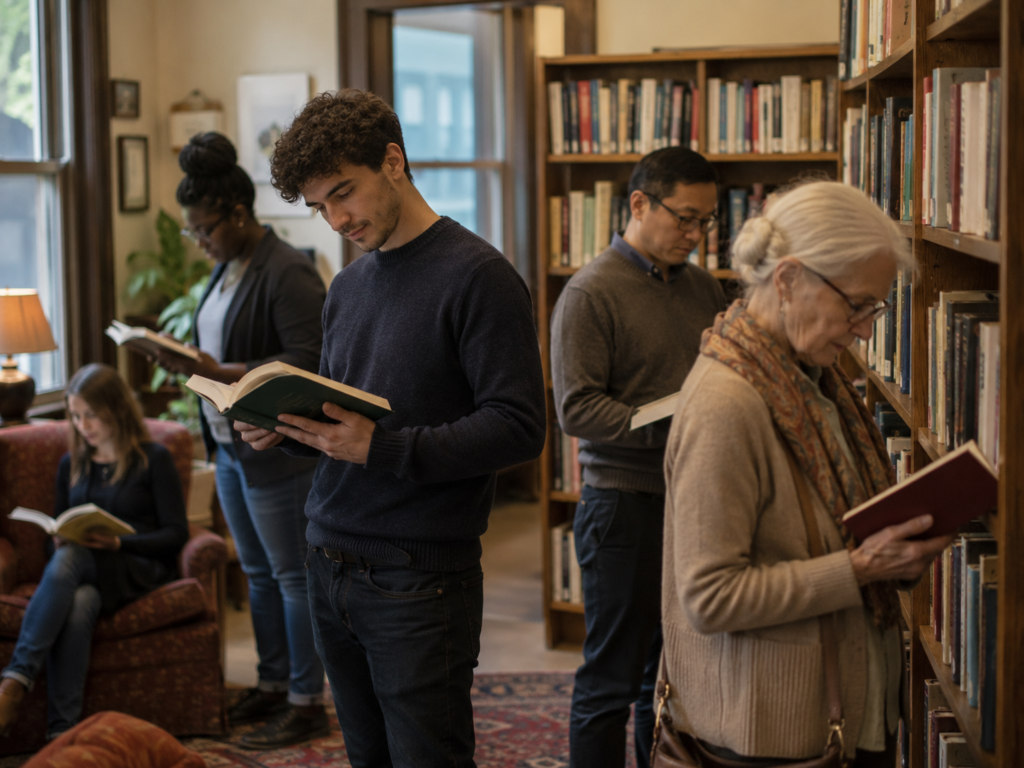
Do Not Turn Reading Into Another Masculine Performance
Men can ruin anything by turning it into status.
Reading is no exception.
Some men use books as props. They want the shelf, the quote, the image, the identity. They want to be seen as deep, intellectual, serious, disciplined, or above the common herd.
That is just ego with better lighting.
Status reading asks:
- Does this make me look smart?
- Will people respect me if I mention this?
- Is this serious enough to match the image I want?
- Can I use this idea to win arguments?
Reading for life asks better questions:
- Did this widen me?
- Did this move me?
- Did this entertain me?
- Did this challenge me?
- Did this comfort me?
- Did this help me understand something human?
- Did this give me language for something I have felt but never named?
- Did this make the world feel larger?
Those questions are healthier.
A man does not need to pretend to enjoy books he hates. He does not need to dismiss popular books because they are fun. He does not need to sneer at romance, fantasy, thrillers, or anything else people read with actual appetite.
Snobbery is not intelligence.
It is insecurity dressed as taste.
Read What Keeps You Alive Inside
A man’s inner life matters.
Not in a soft, precious, melodramatic way.
In a practical way.
A man with no inner life often becomes reactive, bored, bitter, numb, or dependent on outside noise to feel anything. He may work. He may provide. He may function. But inside, the range starts shrinking.
Reading can help keep that range open.
A funny book can keep humor alive. A sad book can make grief less lonely. A strange book can keep imagination from drying out. A beautiful book can remind a man that language is more than instructions and arguments. A hard book can make him wrestle with something real. A familiar book can give him comfort when life feels unstable.
A man does not need to explain every one of those choices to anyone.
Sometimes the book you need is not the book that looks impressive.
Sometimes it is the book that helps you breathe.
Audiobooks Count
Audiobooks count.
This should not be controversial, but some people like making rules so they can feel superior.
A man listening to a book while driving, walking, lifting, mowing, cleaning, commuting, or sitting in a chair at the end of a long day is still taking in a book.
Different format. Same story. Same ideas. Same language.
For many men, audiobooks may be the most realistic way back into reading.
Good.
Use what works.
The point is not to perform literacy in the approved costume. The point is to build a life where books, stories, ideas, and language have room to enter.
If listening works, listen.
This also connects to Practical Skills That Keep Men Useful. A practical man uses the tools that help him keep growing, not just the ones that look impressive.
Quit Bad Books Without Guilt
You do not have to finish every book.
Some books are bad. Some are padded. Some are dishonest. Some are not for you. Some have one good idea trapped inside two hundred pages of throat-clearing. Some are simply wrong for the season you are in.
Quit them.
Life is too short to keep dragging yourself through a book just because some imaginary librarian in your head is judging you.
That said, do not quit every book the moment it challenges you. There is a difference between a bad book and an uncomfortable book.
A bad book wastes your attention.
An uncomfortable book may be doing useful work.
Learn the difference.
Practical Standard: Quit books that waste your attention. Stay with books that challenge your comfort for a good reason. The skill is learning which is which.
Rereading Counts Too
Rereading is not failure.
A familiar book can meet a man differently at fifty than it did at twenty-five. The book may be the same, but the reader is not.
A novel about love reads differently after heartbreak. A book about fathers reads differently after becoming one. A story about grief reads differently after real loss. A book about courage reads differently after discovering where you are afraid. A book about foolishness reads differently after recognizing yourself in the fool.
Rereading can reveal what the younger version of you missed.
There is no shame in returning to a book that still has something to give.
Not Every Book Needs an Immediate Lesson
Some books will give you a clear action.
Apologize. Save money. Walk more. Call your son. Stop lying to yourself. Ask a better question. Fix the thing.
Other books will not.
They may leave only an atmosphere, a mood, a phrase, an image, a laugh, a wound, or a strange little doorway in the mind.
That still counts.
Not all growth announces itself as a to-do list. Sometimes a book changes the furniture inside your head and you do not notice until much later.
This is why reading only for immediate usefulness can become too small.
A man should read some books because they are useful. He should read some because they are beautiful. Some because they are fun. Some because they are weird. Some because they are comforting. Some because they make him feel less alone.
Some because he wants to know whether the dragon, detective, spaceship, monk, widow, idiot, soldier, thief, or half-competent hero makes it out alive.
That is enough.
Use Books to Return to Life, Not Avoid It
Reading can become avoidance if a man uses it to hide from his responsibilities.
That needs to be said.
A man can disappear into books the same way another man disappears into work, alcohol, screens, hobbies, outrage, or endless planning. Anything good can become a shelter from necessary action.
So the standard is not “read instead of living.”
The standard is “read in a way that helps you return to life more awake.”
Read, then come back.
Come back to your family. Come back to your work. Come back to your body. Come back to the hard conversation. Come back to your responsibilities. Come back with more language, more patience, more humor, more perspective, or at least a little less rust inside your head.
Books are not a replacement for living.
They are one way to live more fully.
A Practical Starting Point
Start with appetite.
Not status. Not guilt. Not the book some productivity influencer says you are supposed to read before breakfast while journaling in a cold plunge.
Pick something you actually want to read.
That may be:
- A mystery
- A biography
- A western
- A fantasy novel
- A book about history
- A short story collection
- A book your child loves
- A book your wife, husband, partner, or friend keeps recommending
- A book you loved years ago
- A book that makes you laugh
- A book that explains one thing you actually need to understand
- An audiobook for the car
- A library book with no commitment attached
Then read a small amount.
Ten pages. One chapter. Fifteen minutes. One commute. One lunch break. One evening instead of another hour of scrolling.
Do not make it dramatic.
Make it repeatable.
A reading life is not built by announcing that you are now a reader. It is built by giving books a regular place to enter your actual life.
Common Mistakes Men Make
The first mistake is reading only to look smart. That turns books into props instead of companions, tools, teachers, and doorways.
The second mistake is treating fiction like lesser reading. Fiction can build imagination, empathy, humor, patience, and emotional range.
The third mistake is quitting all difficult books. Some books waste your time. Others expose your limits. Learn the difference.
The fourth mistake is forcing every book to produce an immediate lesson. Some books work slowly.
The fifth mistake is letting embarrassment keep them from starting again. A man who has not read much in years can still begin with one book, one chapter, one audiobook, one page.
The sixth mistake is reading only people who confirm what he already thinks. That is not learning. That is polishing the inside of a cage.
This is close to the pattern covered in Why Men Stop Learning: Pride, Comfort, and Fear Disguised as Certainty. A man can stop learning even while surrounded by information if he only allows in what flatters him.
Reading Is Part of Staying Teachable
Reading for life requires humility.
You have to admit that other people may know things you do not know. You have to admit that someone from another century, another country, another gender, another class, another faith, another mistake, or another kind of life may have something to show you.
That does not mean accepting every idea. It does not mean surrendering judgment. It does not mean pretending every book deserves reverence.
It means staying teachable.
A man who stays teachable does not have to remain trapped inside the limits of his own experience. He can borrow wisdom, test assumptions, challenge old certainties, and widen his sense of what it means to be human.
That connects directly to Humility Is Part of Learning: How Men Admit What They Don’t Know. A man who cannot admit what he does not know will eventually reduce reading to confirmation.
That is a waste.
A Better Standard
Reading is not about proving you are smart.
It is about staying alive to more of life.
Read to learn. Read to rest. Read to laugh. Read to grieve. Read to escape for an hour and return steadier. Read to understand people you will never meet. Read to visit places you will never stand. Read to hear language used well. Read to challenge your assumptions. Read to remember wonder. Read because the story is good and you want to know what happens next.
That is enough.
A man does not need to turn reading into status.
He needs to let reading do what it has always done at its best: widen the room inside him.
Where to Go Next
This page is part of Tenet 11: Lifelong Learning, which is about staying useful, curious, adaptable, and awake as a man gets older.
Continue with:
Humility Is Part of Learning: How Men Admit What They Don’t Know
Learning After 40, 50, or 60: How Men Stay Useful With Age
Practical Skills That Keep Men Useful
Why Men Stop Learning: Pride, Comfort, and Fear Disguised as Certainty
Continue Through the 15 Tenets
Back to Tenet 11: Lifelong Learning
All Tenets: 15 Tenets for Positive Masculinity
Next Tenet: Tenet 12: Strength Without Ego