Beyond Your Household
Strength does not exist in isolation.
A man can be physically strong, financially stable, disciplined in private, loyal to his family, and still be weak in the larger sense if he contributes nothing beyond his own walls.
That sounds harsh.
It should.
Because there is a kind of masculinity that talks endlessly about strength, responsibility, leadership, and protection while refusing to be useful anywhere it is not personally comfortable. It wants the language of honor without the inconvenience of involvement. It wants respect without service. It wants independence without obligation. It wants to criticize the world from a safe distance while doing very little to make the nearest part of the world better.
That is not strength.
That is retreat with better branding.
Community is not someone else’s responsibility.
It starts with the man in the mirror.
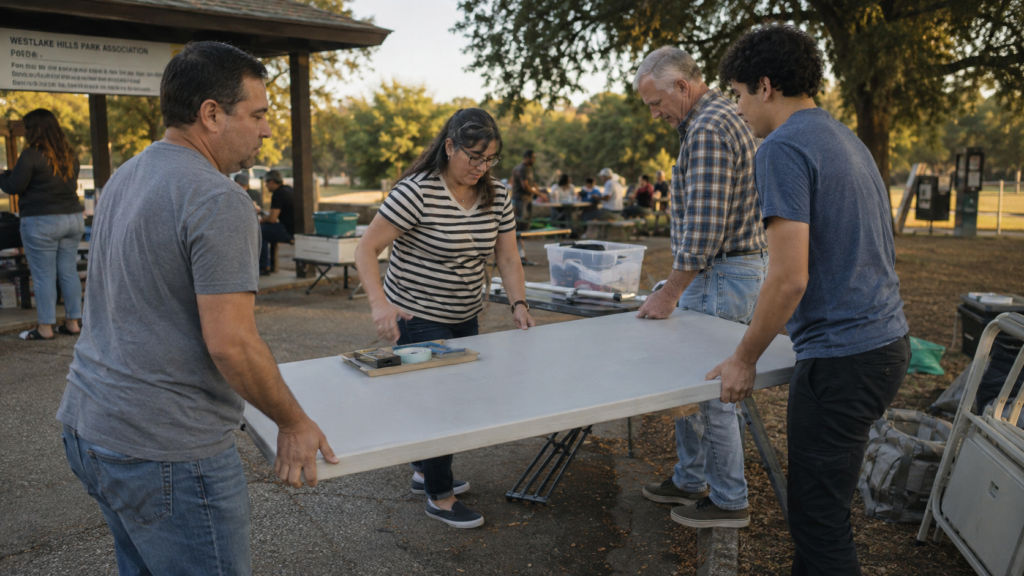
Not because every man has to save the town, lead the neighborhood, organize the fundraiser, coach every team, mentor every kid, or become the unofficial mayor of wherever he lives. Most men do not need a bigger stage. They need a smaller circle where they actually show up.
Community begins close.
It begins with the people around you.
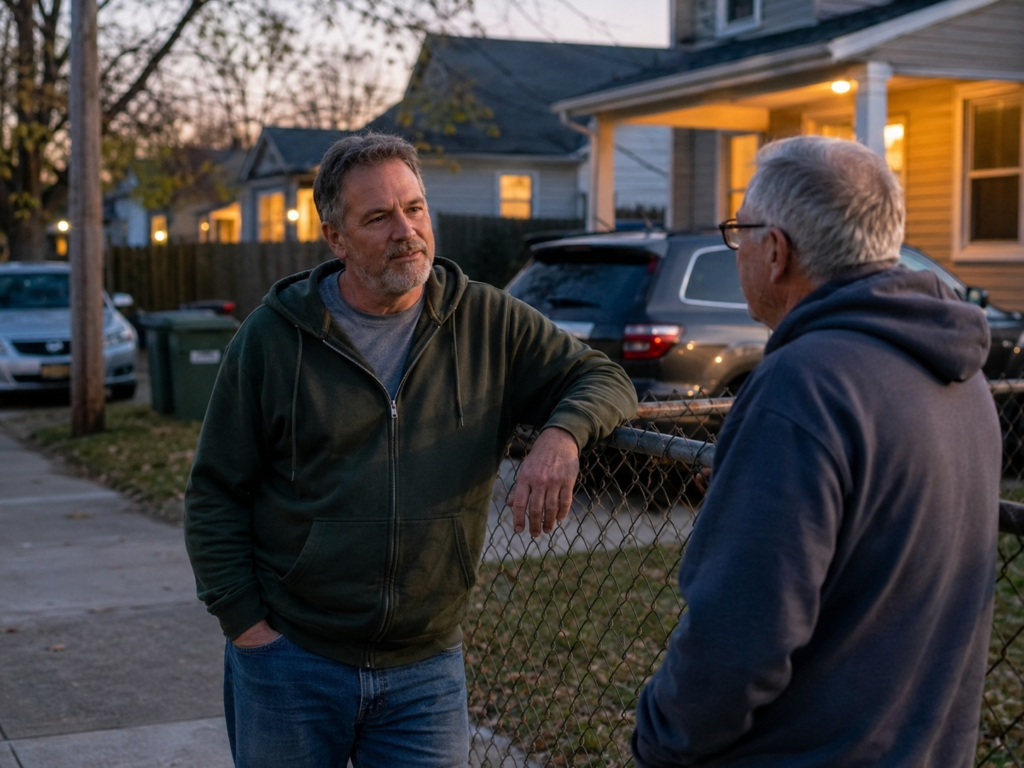
The neighbor whose name you still do not know. The young man at work who needs steadiness more than sarcasm. The local place that keeps running because ordinary people give time instead of opinions. The family down the street dealing with more than they let on. The group you keep saying someone should help. The friend you have not checked on because both of you are pretending silence means strength.
A strong man does not need constant visibility.
But he should leave evidence.
A place should be a little more stable because he was there. A younger man should have a better example because he crossed his path. A neighbor should know he is not alone. A community should have at least one more adult who does not vanish when things get inconvenient.
That is the heart of Tenet 6.
Strength should extend beyond the self.

Why Community Is a Measure of Strength
Isolation is not independence.
Disconnection is not discipline.
A man who avoids community avoids responsibility. A man who engages it builds resilience that extends beyond himself.
Community gives context to strength. It turns personal capability into shared stability.
A man’s private strength matters. He should govern himself. He should handle his money. He should care for his body. He should keep his word. He should manage his emotions. He should be steady inside his own household.
But if all of that strength stops at the front door, something is missing.
Strength is not only about what a man can endure. It is also about what he can help carry.
That does not mean carrying everyone else’s life. That is not community. That is martyrdom, and it usually turns sour. But a man should be willing to carry some share of the place he inhabits. He should not live as a permanent consumer of stability built by others.
Every functioning community depends on people who do more than take.
Someone checks on the elderly neighbor. Someone notices the kid drifting. Someone helps clean up after the event. Someone teaches the skill. Someone shows up before the crisis turns dramatic. Someone keeps a level head when the room wants panic. Someone offers tools, time, experience, patience, money, labor, presence, or judgment.
A man does not need to do all of that.
But he should do some of it.
A community weakens when capable men decide that nothing outside their personal comfort is their concern.
The result is predictable.
Neighbors become strangers. Younger men grow up without grounded examples. Families become isolated. Local problems become someone else’s job. Criticism replaces contribution. Men become observers of decay instead of participants in repair.
That is not masculine strength.
That is abdication.
A strong man does not need to be everywhere. He does not need to fix everything. But he should not be absent from everything either.
The Myth of the Lone Wolf
Some men confuse withdrawal with self-reliance.
They pride themselves on detachment:
- No neighbors
- No obligations
- No involvement
- No vulnerability
- No need for anyone
- No reason to show up unless it directly benefits them
This is not stoicism.
It is abandonment.
The lone wolf image sounds tough until you remember that wolves are pack animals. The actual lone wolf is usually separated, exposed, and trying to survive. It is not an ideal. It is a problem.
Men often dress isolation up as strength because isolation feels safer than connection.
Connection creates risk.
People may disappoint you. They may need something. They may see through the image. They may ask how you are really doing. They may expect you to show up again after you showed up once. They may remind you that you are not as independent as you like to think.
That can feel uncomfortable.
But discomfort is not always a warning. Sometimes it is the cost of becoming less alone.
A lot of men do not become isolated overnight. They drift there.
Work gets busy. Marriage gets strained. Divorce happens. Friends move. Children grow. Parents age. Health changes. Money pressure builds. Pride hardens. Shame gets quiet. Old friendships become annual text messages. New friendships feel awkward. The man keeps telling himself he is fine because he is still functioning.
Then one day he realizes he has contacts but no community.
He has people he knows, but few people who know him.
He has opinions about the world, but little participation in the place where he lives.
That is a dangerous place for a man to stay.
Isolation corrodes slowly. It narrows judgment. It amplifies resentment. It makes small problems feel larger. It turns discomfort into identity. It convinces a man that needing people is weakness, then punishes him for having no one.
A strong man does not have to become socially needy.
But he should be socially honest.
He needs connection. He needs contribution. He needs places where he is not just a worker, provider, customer, voter, screen name, or private fortress.
He needs human ties strong enough to interrupt the lie that no one matters and no one would notice.
For the practical side of rebuilding connection, read How Men Build Community When They Feel Isolated.

Neighborliness Without Weirdness
Community often starts with something embarrassingly simple.
Know the people around you.
That does not mean becoming nosy. It does not mean forcing friendship. It does not mean wandering the street with unsolicited life advice and a casserole no one asked for. It means being aware enough to notice, normal enough not to make it strange, and respectful enough to let connection grow naturally.
A better neighbor is not the man who inserts himself into everyone’s business.
A better neighbor is the man who can be trusted near everyone’s business.
There is a difference.
You do not need to know every detail of a neighbor’s life to be useful. You can learn names. You can wave. You can notice when something seems off. You can help carry something heavy. You can move the trash can back from the road. You can shovel the extra few feet. You can offer a tool. You can check after a storm. You can be the calm adult when something breaks, floods, falls, sparks, or makes a noise no machine should legally make.
Neighborliness is not complicated.
It is presence without intrusion.
Most people do not need you to be their new best friend. They need enough trust to know that if something goes wrong, the man next door is not useless, hostile, invisible, or weird about it.
This matters more than people admit.
A neighborhood where people know one another is different from a neighborhood full of locked doors and silent suspicion. Not perfect. Not magically safe. Not some nostalgic fantasy where everyone borrows sugar and agrees on politics. Just stronger.
Small awareness creates small trust.
Small trust creates faster help.
Faster help creates a stronger community.
A man should not underestimate that.
The support page for this section is How to Be a Better Neighbor Without Being Weird About It.
What It Means to Be a Pillar
Being a pillar does not mean being perfect or public.
It means being present and dependable.
A pillar:
- Is known before he is needed
- Helps without needing applause
- Contributes skills, time, or effort
- Participates instead of critiquing from the sidelines
- Keeps his word when the task is boring
- Remains steady when other people get loud
- Does not make service about his ego
Presence matters more than recognition.
A pillar does not need to announce himself. He does not need to dominate the room. He does not need to become the official leader of every group he joins. In fact, some men destroy community because they cannot serve without taking over.
They arrive helpful, then become controlling.
They volunteer, then resent everyone.
They mentor, then preach.
They lead, then need obedience.
They serve, then keep score.
That is not pillar behavior. That is ego using service as a costume.
A real pillar supports weight without demanding that everyone stare at the column.
This matters because community does not run only on big dramatic acts. It runs on boring dependability.
The chairs get stacked. The food gets delivered. The young man gets a ride. The old man gets checked on. The meeting gets attended. The problem gets fixed. The trash gets picked up. The coach shows up again. The volunteer comes back next week. The man who said he would be there is there.
This kind of contribution does not always feel heroic.
Good.
Hero addiction ruins service.
Some men do not want to be useful. They want to be seen being useful. Those are not the same thing.
Tenet 6 asks for the quieter standard.
Be dependable enough that people trust your presence.
Be humble enough that they do not regret needing it.
Service Without Burnout
Serving your community does not mean saying yes to everything.
A man can be generous and still have limits. He can be useful without becoming available to every need. He can care deeply without turning himself into the default answer for every problem around him.
That distinction matters.
Because good men burn out too.
Not always because they are weak. Often because they are dependable. They notice what others miss. They step in when others step back. They know how to fix things, carry things, organize things, calm things down, and make problems smaller. People learn this. Then the requests start coming.
One favor becomes three.
One committee becomes every committee.
One young man who needs guidance becomes six.
One neighbor who needs help becomes the whole block quietly assuming he is available.
One act of service becomes an identity.
And once service becomes identity, saying no starts to feel like betrayal.
That is where trouble begins.
The man keeps showing up, but the spirit changes. What started as generosity becomes obligation. What started as contribution becomes resentment. What started as strength becomes exhaustion dressed up as virtue.
He says yes when he means no.
He helps while quietly keeping score.
He gives time he does not have, energy he has not restored, and attention that should have gone first to his household, his health, his work, or his own stability.
Then he gets angry that other people believed his yes.
That is not clean service.
It is service without truth.
A man has to be honest about why he is helping.
Is he serving because there is a real need he can meet?
Or because being needed makes him feel important?
Is he helping from strength?
Or from guilt?
Is he serving the community?
Or hiding from something at home?
Is he giving wisely?
Or buying approval with exhaustion?
Is he being generous?
Or afraid to disappoint people?
These questions are uncomfortable because they cut through the noble language. A man can call it service when it is really pride. He can call it duty when it is really fear. He can call it sacrifice when it is really a refusal to set adult boundaries.
Community does not need that version of him.
It needs the steady version.
The honest version.
The version that can help without needing to rescue. The version that can contribute without taking over. The version that can say, “I can do this much,” and mean it. The version that understands that a smaller commitment kept cleanly is better than a large commitment carried bitterly.
Limits do not weaken service.
Limits preserve it.
A man with limits can return next week. A man without limits eventually disappears, explodes, or becomes quietly resentful of the very people he once wanted to help.
That is not stability.
That is delayed collapse.
Useful service has a proper order. A man should not neglect his family to look noble in public. He should not damage his health to maintain a reputation for availability. He should not say yes to every outside request while the people closest to him get the tired, irritated, leftover version of him.
That is not community-minded.
That is imbalance.
There is also a difference between helping and rescuing.
| Helping | Rescuing |
|---|---|
| Strengthens people | Keeps people dependent |
| Meets a real need | Takes ownership of a problem that is not yours |
| Respects both people | Feeds the helper’s ego |
| Offers support | Creates reliance |
| Teaches when possible | Repeats the same rescue over and over |
| Has limits | Has no clear end |
| Leaves the other person more capable | Leaves the other person waiting for you again |
A man needs enough humility to know the difference.
Sometimes the strongest service is showing up with tools.
Sometimes it is giving money.
Sometimes it is teaching a skill.
Sometimes it is making the call, giving the ride, stacking the chairs, checking on the neighbor, or sitting with someone who should not be alone.
And sometimes the strongest service is saying:
“I cannot take that on.”
“I can help for two hours, not every weekend.”
“I can show you how to do it, but I cannot do it for you every time.”
“I care, but this is not mine to carry.”
“No.”
That last one is hard for men who have built their identity around being useful.
But a man who cannot say no is not fully serving.
He is being consumed.
Tenet 6 is not asking men to become martyrs for every local need. It is asking men to become dependable contributors. There is a difference.
A martyr eventually needs witnesses.
A contributor gets the work done and goes home with his soul intact.
Community needs men who can serve without making service about ego, guilt, escape, or applause. It needs men who can give from strength, not depletion. It needs men who understand that burnout does not make service holier. It usually makes it shorter, messier, and less honest.
Serve where you can.
Serve with a clean heart.
Serve within real limits.
Then return.
That is how service becomes sustainable. That is how a man stays useful without becoming resentful. That is how community gets stronger without one dependable man quietly falling apart under the weight of everyone else’s expectations.
For the practical version of this, read Useful Ways to Serve Your Community Without Burning Out.

Mentorship Without Preaching
Younger men do not need more noise.
They need examples.
They need honest conversations. They need correction that does not humiliate them. They need men who can tell the truth without turning every conversation into a lecture about how soft everyone is now. They need someone who remembers being young without romanticizing his own stupidity.
A younger man does not need an older man pretending he was born wise.
He needs one honest enough to admit that wisdom usually comes with receipts.
Bad choices. Broken trust. Wasted money. Pride that cost too much. Anger that did damage. Silence that should have been an apology. Work avoided until it became a crisis. People taken for granted. Lessons learned late because no one explained them early, or because the younger man was too stubborn to listen when someone tried.
That is part of what older men carry.
Experience is not just memory.
It is responsibility.
There is an old saying: “A society grows great when old men plant trees in whose shade they shall never sit.”
That is mentorship.
A man passes something forward knowing he may never see the full result. He may not get thanked. He may not be there when the lesson finally lands. He may offer guidance that gets ignored for five years before it suddenly makes sense on some hard Tuesday when the younger man is standing in the wreckage of his own choices.
Plant the tree anyway.
That is what mature men do.
Mentorship is not performance.
It is not a chance for an older man to prove he has answers. It is not a captive audience for war stories, regret, politics, or lectures about how men used to be better when trucks were louder and feelings were illegal.
Mentorship is service.
A younger man may need help learning how to work, speak, save, apologize, train, choose friends, handle anger, treat women, recover from failure, avoid debt, manage tools, show up on time, build confidence, leave excuses behind, or stop confusing attention with respect.
He does not need perfection from an older man.
He needs steadiness.
He needs a man who can say hard things without needing to feel superior. He needs someone who can correct him without crushing him. He needs someone willing to tell the truth and stay calm when the truth is not immediately welcomed.
He needs someone who can say:
“I handled that badly when I was younger.”
“Here is what that choice will probably cost you.”
“You are not weak because this is hard.”
“You are making this worse than it needs to be.”
“Do not confuse pride with principle.”
“I believe you can do better, so I am going to tell you the truth.”
That kind of mentorship matters because it gives younger men something many of them are missing: a sober adult witness.
Not a buddy trying to stay cool.
Not a critic waiting to pounce.
Not a preacher standing above them.
A witness.
A man who has lived long enough to see patterns repeat. A man who knows which mistakes are survivable and which ones leave scars for decades. A man who understands that confidence without character becomes arrogance, freedom without discipline becomes chaos, and strength without humility becomes danger.
A community without mentorship forces every generation to learn the same lessons by damage.
That is wasteful.
Men should not hoard hard-earned wisdom like a private trophy collection. If the lesson cost you pain, use it to reduce someone else’s avoidable pain. If your failure taught you something useful, do not bury the lesson out of pride. If age has given you perspective, do not spend it all complaining about the young.
Build shade.
You may not sit in it.
Build it anyway.
But mentorship also requires humility.
A younger man is not a project. He is not raw material for your ego. He is not required to become a copy of you. He does not exist to validate your life choices, repeat your opinions, inherit your bitterness, or prove that your generation had everything figured out.
It did not.
Every generation has blind spots.
Every generation has sins.
Every generation has men who learned too late and men who never learned at all.
The point of mentorship is not to preserve the older man’s ego. The point is to help the younger man become stronger, wiser, more responsible, and more capable of standing on his own.
That means listening before correcting.
It means asking questions before giving speeches.
It means giving practical help when practical help is what is needed.
It means knowing when to tell a story, when to give a warning, when to shut up, and when to simply stand nearby while a younger man learns something the hard way.
A good mentor does not need control.
A bad mentor does.
A bad mentor needs the younger man to stay dependent so he can keep feeling important. A good mentor wants the younger man to grow beyond needing constant guidance. He wants him to become the kind of man who can one day plant trees of his own.
That is the deeper work.
Not control.
Development.
Not preaching.
Formation.
Not making a younger man smaller so the older man can feel larger.
Making him stronger so the community becomes stronger after both men are gone.
Tenet 6 rejects the lazy version of age that only complains, mocks, and withdraws.
It asks older men to become useful with what time has taught them.
Mentor without preaching. Correct without crushing. Guide without controlling. Plant trees you may never sit under.
The deeper support page is How to Mentor Younger Men Without Preaching at Them.

Community in Everyday Practice
Community strength is built through ordinary actions.
This includes:
- Knowing the people around you
- Offering help instead of watching from a distance
- Taking responsibility for shared spaces
- Showing younger people what involvement looks like
- Supporting local efforts that actually do useful work
- Building trust before a crisis
- Being available in ways that are sustainable
- Refusing to turn every local problem into someone else’s job
You model belonging through action, not instruction.
That matters because men often talk themselves out of community by making it too large.
They think service has to mean formal volunteering. It can, but it does not have to.
They think mentoring has to mean an official program. It can, but it does not have to.
They think community has to mean joining a board, church, nonprofit, club, lodge, firehouse, school group, veterans group, recovery group, mutual aid network, civic association, or team. It can, but it does not have to begin there.
Start smaller.
Be useful where you already are.
At home. On your street. At work. In your gym. In your church or non-religious community. Around your friends. Around your extended family. Around younger men who already cross your path. Around the local places that make life better and usually run on too little help.
Community is not built only by institutions.
It is built by repeated human reliability.
That is why small action matters.
One conversation may not change much.
One checked-in neighbor may not transform the block.
One mentored young man may not fix a generation.
One hour of service may not rebuild civic life.
But repeated over time, these things create social muscle.
And social muscle matters.
A community with social muscle responds better. It sees needs sooner. It absorbs shocks better. It produces more trust. It gives isolated people more ways back in. It gives younger people examples that are not filtered through screens. It reminds men that their strength has practical value beyond private survival.
That is worth building.
Leading by Example
Your engagement teaches others what strength looks like.
Especially:
- Your children
- Younger men
- People who are struggling
- Men who are isolated
- Neighbors who assume no one cares
- Friends who are waiting for someone else to go first
They learn whether capable men step forward or stay silent.
Leadership is not a title.
It is behavior that repeats.
A man does not need to call himself a leader to lead. Often the title is the least important part. People watch patterns. They watch how a man speaks when no reward is available. They watch whether he follows through. They watch whether he repairs what he damages. They watch how he treats people who cannot benefit him. They watch whether his stated values survive inconvenience.
That is leadership in community.
Not speeches.
Patterns.
A man who complains about the next generation but never engages younger people is not leading.
A man who criticizes the neighborhood but never learns a neighbor’s name is not leading.
A man who says the world lacks responsibility but refuses ordinary service is not leading.
A man who talks about brotherhood but disappears when another man struggles is not leading.
Leadership requires visible behavior.
Not constant visibility.
Visible behavior.
There is a difference.
The goal is not to perform goodness. The goal is to become the kind of man whose repeated actions make goodness easier for others to recognize and imitate.
Children learn from that.
Younger men learn from that.
Other adults learn from that.
Even struggling men learn from that, because sometimes the first step out of isolation is seeing another man participate without making it weird, weak, or performative.
Community leadership is contagious when it is honest.
The Difference Between Community and Performance
Community is not content.
Community is not optics.
Community is not a photo of a man holding a shovel, a check, a clipboard, or a kid’s soccer trophy while making sure the camera catches his good side.
Recognition is not automatically bad. Useful work sometimes needs visibility so others can join, support, fund, or trust it. But a man should be careful when service starts needing an audience.
Attention changes motives.
It does not always corrupt them, but it tests them.
If a man only helps when people know he helped, something is off.
If he needs constant praise to keep serving, something is off.
If he uses community service to avoid responsibilities at home, something is off.
If he volunteers in public but is unavailable in private, something is off.
If he mentors younger men but refuses correction himself, something is off.
If he talks about being a pillar while quietly needing everyone to admire the pillar, something is off.
Real community does not require false modesty. A man can accept thanks. He can be visible. He can lead publicly when needed.
But the work has to remain the point.
The people have to remain the point.
The place has to remain the point.
When image becomes the point, community becomes a stage.
Tenet 6 is not about building a stage.
It is about building trust.
Community and Family
Community does not replace family.
It should not be used to escape family either.
A man can get this wrong in both directions.
Some men use family as an excuse to avoid any responsibility beyond the household. They say, “I take care of mine,” as if that ends the moral conversation. Taking care of one’s own is good. It is foundational. But it is not the whole of adult responsibility.
Other men use community involvement to avoid the uncomfortable work inside the household. They are generous outside and difficult at home. Patient with strangers and sharp with family. Available for the committee and absent at dinner. Praised in public and resented in private.
That is not balance.
A man should not serve the community by abandoning his closest duties.
Nor should he use his closest duties as permanent permission to be useless beyond them.
Tenet 5 says family comes first, but not just in words.
Tenet 6 says strength extends beyond the household.
Those two Tenets are not enemies.
They correct each other.
Family gives community service its first boundary. Community gives family life a wider purpose.
A man should ask both questions:
“Am I using community involvement to avoid home?”
“Am I using home as an excuse to avoid community?”
The answer may sting.
Good.
That is usually where the useful work begins.
Community and Personal Stability
Men who engage with their communities tend to find more than tasks.
They find context.
They remember that their problems are not the only problems. They remember that their skills matter. They remember that they are not just consumers, employees, fathers, husbands, sons, patients, taxpayers, or tired men trying to get through the week.
They are participants.
That matters.
A man who contributes somewhere is harder to waste.
A man who belongs somewhere is harder to isolate.
A man who is known somewhere is harder to disappear.
Community gives a man mirrors that private life does not always provide. Other people can reveal strengths he forgot he had. They can also reveal selfishness, impatience, pride, avoidance, and fear that he would rather not see.
That is part of why some men avoid community.
Community exposes things.
It exposes whether a man can cooperate. Whether he can take correction. Whether he can serve under someone else’s leadership. Whether he can be useful without controlling everything. Whether he can commit and return. Whether his values work when other people are involved.
Private strength is easier to imagine.
Shared strength gets tested.
That test is valuable.
A man should not avoid every place that reveals him.
He should choose some places where contribution, humility, patience, and dependability get practiced in real time.
That is how community strengthens the man while the man strengthens the community.
When Community Gets Hard
Community is not sentimental.
People are difficult.
Groups can be disorganized. Neighbors can be strange. Committees can become small kingdoms. Volunteers can be flaky. Local politics can be exhausting. Younger men may ignore good advice and learn the expensive way anyway. Service can be thankless. Trust can be slow. Needs can exceed capacity.
None of that cancels the Tenet.
It just makes it honest.
Community does not require naivety. A man does not need to trust everyone, agree with everyone, rescue everyone, or remain involved in every group no matter how dysfunctional it becomes.
Discernment still matters.
Boundaries still matter.
Self-respect still matters.
If a group is manipulative, leave. If service becomes enabling, adjust. If someone abuses your help, stop. If the commitment is harming your family, reconsider it. If the organization is using guilt as fuel, step back. If you are helping because you need to be needed, get honest.
Community is not permission to be used.
It is an invitation to contribute wisely.
A mature man learns the difference between inconvenience and dysfunction.
Inconvenience is part of service.
Dysfunction should not be worshipped as loyalty.
The standard is not endless involvement. The standard is useful involvement, governed by truth.
Practicing Tenet 6
Do not turn this into a heroic reinvention.
You do not need to start a nonprofit, run for local office, become a youth pastor, join every civic group, and knock on doors with the energy of a man selling solar panels by fear.
Start smaller.
Start close.
Do a few of these each week. Keep the practice realistic enough to repeat and honest enough to matter.
Learn three names
Know the names of three people around you that you should probably already know.
A neighbor. A maintenance worker. A regular at the gym. A younger coworker. Someone at church. Someone at the local place you visit often.
Names are not magic, but they are a beginning.
A man cannot build community while treating everyone as background scenery.
Check on one person
Pick one person who may be more isolated than they look.
Send the text. Make the call. Ask the direct question. Stop assuming silence means everything is fine.
Do not make it dramatic.
Just open the door.
A simple “You crossed my mind. How are you holding up?” may matter more than you think.
Be useful in one practical way
Do one concrete act of service.
Not an opinion.
Not a post.
Not a speech.
An act.
Help move something. Fix something. Teach something. Pick something up. Give someone a ride. Support a local effort. Help a neighbor solve a small problem. Show a younger man how to do the thing instead of mocking him for not knowing.
Usefulness builds trust faster than commentary.
Re-enter one community space
If isolation has become your pattern, choose one place to re-enter.
A church. A gym. A volunteer group. A men’s group. A veterans group. A hobby group. A neighborhood association. A local class. A recovery group. A community project. A recurring breakfast with friends.
Do not overthink the first step.
Show up once.
Then show up again.
Community usually returns through repetition, not revelation.
Mentor without making a speech
Find one opportunity to guide a younger man without lecturing.
Ask a better question. Share one hard-earned lesson. Offer practical help. Correct something clearly but calmly. Tell the truth without making him feel small.
Good mentorship often happens in ordinary moments.
Do not waste them.
Serve within your limits
Choose one service commitment that fits your actual capacity.
Not your fantasy capacity.
Not your guilt capacity.
Not your “I’ll somehow make it work” capacity.
Your real capacity.
A smaller commitment kept cleanly is better than a large commitment carried resentfully.
Improve the shared space
Do one thing that makes a shared space better.
Clean it. Repair it. Organize it. Report the problem. Pick up the trash. Replace the thing. Help maintain the place. Leave it better than you found it.
This is basic adult citizenship.
It should not be rare.
Stop outsourcing concern
Notice one local problem you keep complaining about.
Then ask whether there is one small useful thing you can do.
Maybe the answer is yes. Maybe the answer is no. But a man should at least run the question before settling into permanent criticism.
Criticism without contribution becomes lazy fast.
Practice clean boundaries
Say no where your yes would become resentment.
Say yes where your no is just avoidance.
Both matter.
Community requires involvement, but mature involvement has boundaries.
Return after the first effort
This is the real test.
Anyone can show up once when the mood hits.
Community is built by return.
Return to the neighbor. Return to the group. Return to the younger man. Return to the local effort. Return to the habit of being involved.
Dependability is repetition with a spine.
A Practical Standard
Community does not need every man to become famous, public, loud, or endlessly available.
It needs capable men who are willing to be present in ordinary ways. Present enough to know names. Present enough to notice when something is wrong. Present enough to help without making the help about themselves. Present enough to mentor without preaching. Present enough to serve without burning out. Present enough to stop confusing isolation with strength.
That is the practical standard.
A man should make at least one place better because he was there.
That place does not have to be large. It may be a street, a workplace, a family network, a church, a team, a gym, a school, a local effort, a group of younger men, or a circle of older men who need to stop pretending they are fine alone.
One place is enough to begin.
Start there.
Strength Beyond Yourself
Strong communities require capable men.
Capable men require connection.
Do not wait for systems or institutions to solve what presence can address. Systems matter. Institutions matter. Policies matter. But a man should not use the size of big problems as an excuse to ignore the small responsibilities directly in front of him.
No man can fix everything.
That is not the assignment.
The assignment is to stop being useless where usefulness is possible.
Be a neighbor. Be reliable. Be involved. Be known before you are needed. Be steady when people are not. Be useful without needing applause.
Be a pillar, even when no one notices.
Especially then.
The Tenet 6 Support Pages
These pages expand the practical side of Community Matters.
How to Be a Better Neighbor Without Being Weird About It
For men who want to be more connected locally without becoming intrusive, awkward, performative, or overbearing.
How Men Build Community When They Feel Isolated
For men who have drifted into isolation through work, age, divorce, grief, relocation, pride, or neglect and need a practical path back into connection.
Useful Ways to Serve Your Community Without Burning Out
For men who want to contribute without becoming resentful, overcommitted, exhausted, or unavailable to the people closest to them.
How to Mentor Younger Men Without Preaching at Them
For men who have experience worth passing on, but need to guide younger men with humility, clarity, patience, and respect instead of lectures.
Continue Through the 15 Tenets
All Tenets: 15 Tenets for Positive Masculinity
Previous Tenet: Tenet 5 – Family First
Next Tenet: Tenet 7: Love and Respect for All Relationships