
Tenet 8: Strength in Compassion
Compassion is not weakness.
Cruelty is not strength.
A man does not become stronger by hardening himself against every person who suffers, struggles, or falls outside his own experience. He does not become wiser by treating other people’s pain as an inconvenience. He does not become more masculine by refusing to care.
But compassion also has to grow up.
It cannot be built only on emotion. It cannot be driven entirely by outrage, guilt, social pressure, or the need to be seen as one of the good guys. Compassion without judgment eventually gets used. Compassion without boundaries eventually collapses. Compassion without truth eventually starts protecting the wrong things.
Strength in compassion means a man can care without losing himself.
It means he can see injustice without becoming addicted to outrage. He can stand up for someone without making himself the hero of the story. He can challenge cruelty without becoming cruel. He can offer help without handing another person full control of his life, time, energy, or conscience.
That balance is harder than most people admit.
It is easy to be cold.
It is easy to be loud.
It is harder to remain human, clear, useful, and steady when people are hurting, angry, afraid, or demanding more than you can honestly give.
That is where this Tenet lives.
Compassion Begins With Seeing People Clearly
Compassion starts with the willingness to see another person as fully human.
Not as a label.
Not as a headline.
Not as a political symbol.
Not as a problem to solve so you can feel better about yourself.
A man practicing real compassion does not need to agree with everyone. He does not need to approve of every decision. He does not need to excuse harmful behavior or pretend that choices have no consequences.
But he also does not have to strip people of dignity to protect his own worldview.
That matters because modern life constantly trains men to sort people into simple categories: good or bad, weak or strong, victim or villain, ally or enemy, useful or disposable.
Real life is rarely that clean.
People can be hurting and still be responsible for their choices.
People can be wrong and still deserve basic dignity.
People can need help and still need boundaries.
People can suffer injustice and still be imperfect.
Strength in compassion means refusing lazy categories when a human being is standing in front of you.
That does not mean becoming soft on truth.
It means refusing to use truth as an excuse for contempt.
Compassion needs judgment and courage
Care becomes strength when it can see suffering clearly, respond usefully, oppose cruelty, and still keep boundaries, proportion, and respect for another person’s agency.
Social Responsibility Starts Close to Home
It is easy to have opinions about injustice somewhere far away.
It is harder to notice what happens in your own house, family, workplace, friend group, neighborhood, church, gym, or community.
A man can repost every acceptable opinion and still treat the people closest to him poorly. He can argue about fairness online while ignoring the unfairness he permits in his own circles. He can speak loudly about compassion while making his wife, children, coworkers, or friends manage his anger, ego, or silence.
Social responsibility starts close enough to cost something.
It shows up when a man refuses to laugh along with cruelty just to stay comfortable.
It shows up when he notices someone being excluded, mocked, dismissed, or mistreated and decides not to pretend he missed it.
It shows up when he teaches younger men that strength does not require humiliation.
It shows up when he treats service workers, strangers, older people, children, and people with less power as fully human.
It shows up when he uses whatever influence he has to make life less brutal for the people around him.
Most of this will never be dramatic.
Nobody may applaud.
Nobody may post about it.
That is fine.
Quiet decency still counts.
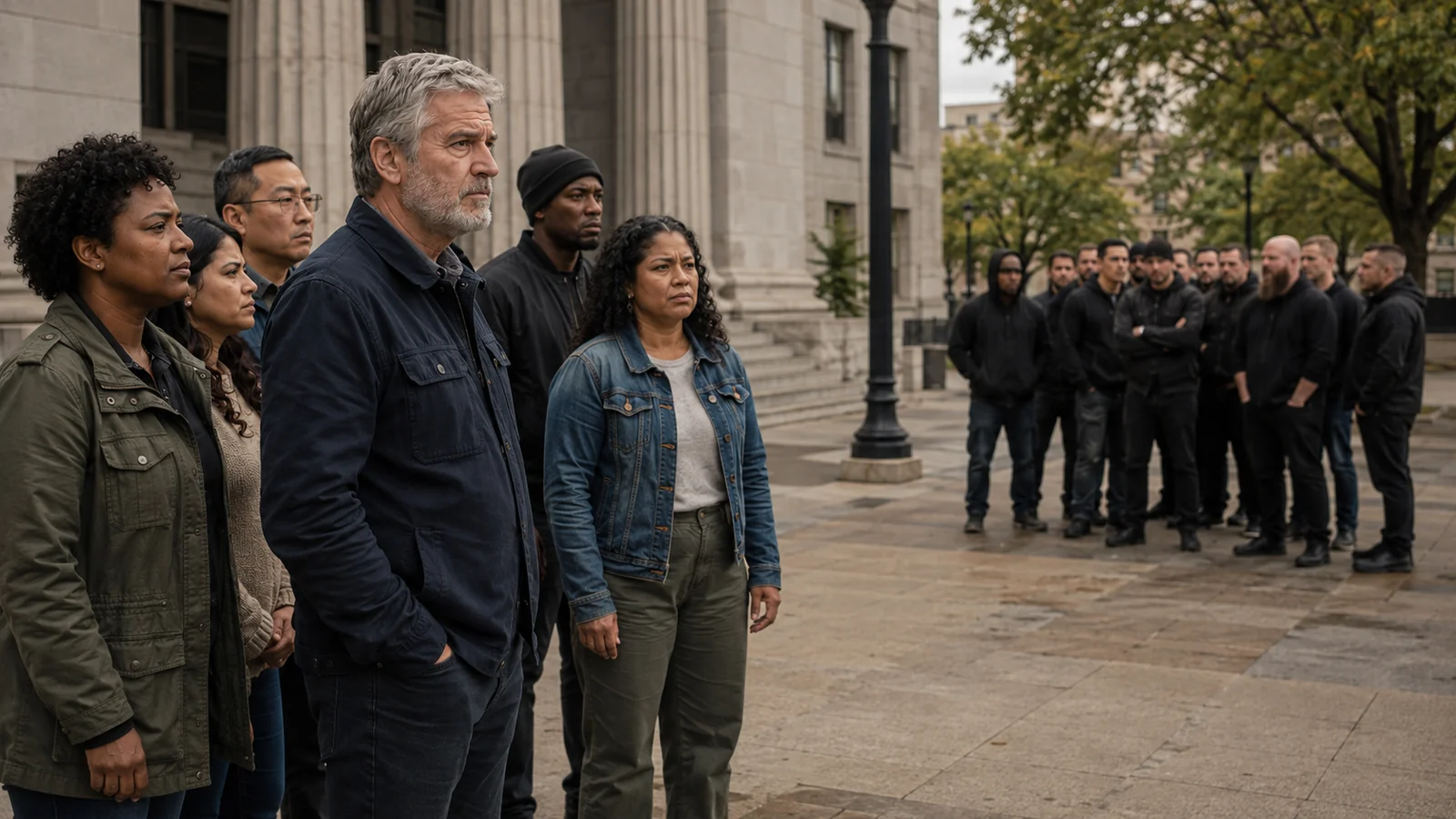
Standing Up Without Making It About You
There is a particular trap men fall into when they first start taking compassion seriously.
They make themselves the center of it.
They want to be the rescuer. The defender. The enlightened one. The man who stepped in when others stayed silent.
Sometimes that instinct comes from a decent place. Sometimes it comes from ego dressed up as virtue.
The difference matters.
Standing up for someone should not require taking over their voice, their story, or their dignity. Help should not become a performance. Support should not turn another person’s pain into your stage.
A practical starting point is simple: before acting, ask what would actually help.
Sometimes that means speaking clearly.
Sometimes it means standing beside someone quietly.
Sometimes it means documenting what happened.
Sometimes it means asking, “Do you want help with this?”
Sometimes it means not escalating a situation just because your anger wants somewhere to go.
This is why standing up for someone without making it about you is one of the hardest parts of this Tenet.
A strong man does not need to become the main character in someone else’s hard moment.
He can help without taking ownership of the whole scene.
Challenging Cruelty Without Becoming Cruel
Cruelty is easy to recognize when it comes from people we already dislike.
It is harder to recognize when it comes from our side, our friends, our family, our politics, our traditions, or our own mouth.
A man committed to compassion cannot only oppose cruelty when it is convenient.
He has to watch for it in himself.
This does not mean he becomes passive. It does not mean he avoids hard conversations. It does not mean he refuses to confront people who are causing harm.
It means he refuses to become what he claims to oppose.
There is a difference between correction and humiliation.
There is a difference between firmness and contempt.
There is a difference between accountability and revenge.
A man can say, “That was wrong,” without trying to destroy someone.
He can set a boundary without turning the other person into a monster.
He can challenge harmful behavior without pretending he has never needed correction himself.
That is not weakness. That is discipline.
Challenging cruelty without becoming cruel requires a man to keep his judgment even when anger gives him permission to abandon it.
That is where strength shows.
Compassion Is Not Permission to Be Used
Some men avoid compassion because they confuse it with being weak, used, or endlessly available.
That confusion is understandable.
Many men have seen kindness exploited. They have watched good intentions become unpaid labor, emotional dumping, financial rescue, or constant availability. They have learned that saying yes too often can turn them into a resource instead of a person.
That is not compassion.
That is poor stewardship.
A man can care and still say no.
He can help and still have limits.
He can listen without becoming someone’s emotional landfill.
He can forgive without pretending trust has been rebuilt.
He can be generous without becoming irresponsible to himself, his family, his work, or his health.
This matters because sustainable compassion needs boundaries. Without boundaries, compassion burns out. When compassion burns out, resentment usually follows. Then the same man who wanted to help starts becoming bitter toward the people he trained to depend on him without limits.
That is not clean service.
That is not healthy care.
Compassion is not permission to be used. It is one of the clearest lines a man has to learn.
The goal is not to become unreachable.
The goal is to become honest.
Can you actually help?
Is this yours to carry?
Are you helping from strength, guilt, fear, pride, or habit?
Are you protecting someone’s growth, or are you protecting yourself from the discomfort of saying no?
Those questions matter.

Caring Without Getting Pulled Into Outrage
Outrage feels productive.
Most of the time, it is not.
Modern outrage is designed to keep people agitated, reactive, and easy to steer. A man can spend hours every week angry about suffering, injustice, corruption, hypocrisy, cruelty, and stupidity without becoming more useful to anyone.
He may feel informed.
He may feel morally awake.
He may simply be exhausted and easier to manipulate.
Compassion requires awareness, but awareness without action turns into emotional noise.
A man does not have infinite attention. He does not have infinite energy. He cannot carry every crisis, every argument, every headline, every betrayal, and every tragedy without becoming less present in the life he actually has.
This is not an argument for apathy.
It is an argument for disciplined attention.
Care where you can act.
Learn enough to be responsible.
Do not let algorithms decide what deserves your emotional life.
Do not confuse constant anger with moral seriousness.
A man who wants to care well has to protect the part of himself that can still act wisely. That means knowing when to step back, when to focus locally, when to stop feeding the outrage machine, and when to turn concern into something useful.
Men can care without getting pulled into outrage, but it requires discipline.
Compassion should make a man more humane.
It should not make him permanently frantic.
Move concern toward action
Ask what would actually help, what belongs to you, what the affected person wants, and whether your response improves the situation or merely displays your emotion.
Justice Without Extremes
Justice is not the same thing as rage.
It is not the same thing as tribal loyalty.
It is not the same thing as punishing people until the crowd feels satisfied.
Justice requires principle.
That means a man has to resist the temptation to excuse bad behavior from people he likes while condemning the same behavior from people he dislikes. He has to resist the cheap comfort of slogans. He has to resist the pressure to surrender his judgment to whatever group is loudest this week.
That is difficult.
Extremes offer certainty.
Compassion offers responsibility.
A man committed to strength in compassion should oppose racism, sexism, exploitation, abuse of power, cruelty, and dehumanization. He should also refuse to treat people as disposable because a crowd has decided they are easy targets.
Both things can be true.
He can stand against harm without becoming addicted to condemnation.
He can care about fairness without pretending every situation is simple.
He can reject cruelty from any direction.
This is where Tenet 8 connects naturally to Tenet 9: Reject Extremism. Compassion without judgment can be captured by extremes. Justice without humility can become another form of domination.
A strong man keeps both.
Where This Tenet Fits in the Framework
Tenet 8 does not stand alone.
It depends on the Tenets before it and prepares the ground for the Tenets after it.
Tenet 2: Integrity matters because compassion without honesty becomes performance.
Tenet 6: Community Matters matters because compassion has to leave theory and become service, presence, and responsibility.
Tenet 7: Love and Respect for All Relationships matters because dignity has to show up in the way a man treats real people, not just groups he claims to support.
Tenet 10: Emotional Intelligence matters because a man who cannot regulate himself will often confuse his emotional surge with moral clarity.
Tenet 12: Strength Without Ego matters because healthy masculinity does not need cruelty to prove strength.
Compassion is not decoration on the framework.
It is one of the tests.
A man’s beliefs become visible in how he treats people when they are vulnerable, different, difficult, inconvenient, or unable to reward him.
Explore the Strength in Compassion Cluster
How to Stand Up for Someone Without Making It About You
A practical guide to helping without taking over, performing, or turning someone else’s hard moment into your own identity.
How to Challenge Cruelty Without Becoming Cruel
How to confront harmful behavior while keeping your judgment, dignity, and self-control intact.
Compassion Is Not Permission to Be Used
Why caring well requires boundaries, honesty, and the ability to say no without becoming cold.
How Men Can Care Without Getting Pulled Into Outrage
How to stay aware and humane without letting the outrage cycle consume your attention, energy, and usefulness.
What Strength in Compassion Looks Like
Strength in compassion is not soft.
It is not sentimental.
It is not performative.
It is the discipline to remain human when contempt would be easier.
It is the courage to speak when silence would protect your comfort.
It is the restraint to help without taking over.
It is the humility to listen before correcting.
It is the wisdom to set boundaries before resentment turns care into bitterness.
A man practicing this Tenet does not need to save the world to live it well. He can start closer than that.
He can treat people with dignity.
He can refuse cruelty in his own circles.
He can protect the vulnerable without making them props.
He can care without surrendering his judgment.
He can stand for fairness without becoming consumed by rage.
That is strength in compassion.
Not weakness.
Not performance.
Strength.
Continue Through the 15 Tenets
All Tenets: 15 Tenets for Positive Masculinity
Previous Tenet: Tenet 7: Love and Respect for All Relationships
Next Tenet: Tenet 9: Reject Extremism