
A man does not stay useful by accident.
Usefulness has to be maintained.
That sounds obvious until you look around and notice how many men stopped learning once they got comfortable, tired, successful, bitter, busy, or convinced they already knew enough. They still have opinions. They still have stories. They still have complaints. But their practical usefulness starts shrinking.
They cannot adapt to basic technology. They cannot cook without someone else handling the real work. They cannot manage stress without blowing up or disappearing. They cannot have a hard conversation without turning it into a fight. They cannot read a contract, fix a small problem, help a younger man learn, or adjust when reality changes.
That is not age.
That is neglected maintenance.
This page is part of Tenet 11: Lifelong Learning, because lifelong learning is not about collecting impressive ideas. It is about staying capable enough to meet life as it changes.
The goal is not to become perfect at everything. The goal is to avoid becoming helpless in areas where a grown man should keep some working competence.

Usefulness Is Better Than Image
A lot of men waste energy trying to look impressive.
They want to look successful, tough, knowledgeable, independent, respected, or in control. That is understandable. It is also a trap.
Image is fragile. Usefulness is sturdier.
A useful man can solve problems. He can make situations better. He can carry responsibility. He can learn what he does not know. He can help without making the room revolve around his ego.
That matters more than looking the part.
A useful man does not need to know everything. He just needs enough humility and skill to keep moving. He knows when to handle something himself, when to ask for help, when a problem is outside his lane, and when pride is about to make the situation worse.
That combination is underrated.
Reality Check: Looking competent and being useful are not the same thing. One protects image. The other actually helps.
Knowledge earns its keep through application
A skill matters when it helps a man maintain a home, solve a problem, support another person, or respond competently when circumstances change.
Basic Home Competence
A man does not need to become a master carpenter, electrician, plumber, mechanic, or contractor. In fact, knowing when not to touch something is part of competence.
But a grown man should have basic home competence if his health, living situation, and circumstances allow it.
That means knowing how to:
- Shut off water
- Reset a breaker safely
- Change a furnace filter
- Use basic hand tools
- Hang something without destroying the wall
- Handle minor repairs
- Read an appliance manual
- Tell the difference between cosmetic, inconvenient, urgent, and dangerous problems
- Know when to call a professional instead of making the damage more expensive
This is not about performing masculinity with a socket set. It is about not becoming useless every time something leaks, squeaks, breaks, loosens, clogs, or needs maintained.
Home competence also teaches judgment. Some jobs are simple. Some are risky. Some are legal or code issues. Some require licensed professionals. A useful man knows the difference, or at least slows down long enough to find out before creating a new problem with confidence and a YouTube video.
Financial Literacy
Money ignorance is expensive.
A man does not need to be wealthy to become financially literate. He does not need to understand every investment product, tax strategy, or market theory. He does need to understand enough to avoid obvious traps and make better decisions.
He should know:
- What he earns
- What he spends
- What he owes
- What interest costs
- What insurance covers and does not cover
- What happens when he signs a contract
- What his retirement situation actually looks like
- What financial habits are quietly weakening his freedom
This matters because money problems do not stay in the bank account. They affect marriage, parenting, stress, health, work choices, confidence, and options.
Financial literacy connects directly to Tenet 4: Financial Maturity. A man who refuses to understand money will often become controlled by it.
That does not mean obsessing over money. It means paying enough attention that avoidable ignorance does not run your life.
Digital Competence
Technology is not optional anymore.
A man can dislike that.
Fine.
He still needs basic digital competence. He should know how to manage passwords safely, recognize common scams, use email clearly, find and save important documents, handle online forms, use basic phone and computer settings, and understand privacy enough not to hand strangers his life through a bad link.
He should also be able to use maps, calendars, banking apps, files, and messages without needing rescue every time something changes.
This is not about becoming obsessed with gadgets. It is about functioning in the world that exists.
Rejecting every new tool does not make a man principled. It often makes him dependent on other people for ordinary tasks. That dependence can become dangerous as he gets older.
A useful man does not have to love technology. He has to learn enough not to be helpless, fooled, or constantly angry at the machine.
This connects to Learning After 40, 50, or 60: How Men Stay Useful With Age, because getting older does not excuse a man from learning the basic tools required to function in his own time.
Cooking and Feeding Yourself
A man should be able to feed himself.
Not impress guests. Not perform chef theater. Feed himself.
That means knowing how to make a few simple meals, shop with some judgment, handle leftovers safely, cook basic proteins, prepare vegetables, and avoid living entirely on drive-thru food, snacks, and whatever someone else puts in front of him.
Cooking is not beneath a man.
Depending on others for every decent meal is not strength.
Food affects energy, health, mood, weight, money, and independence. A man does not need to become precious about it, but he should not treat eating like a problem everyone else is supposed to solve for him.
A few reliable meals can change a lot:
- Eggs
- Rice
- Beans
- Chicken
- Soup
- Salads that are not punishment
- A decent sandwich
- Something in a slow cooker
- Something that does not arrive in a bag through a window
This is basic adult competence.
Physical Maintenance
A man’s body is not a decoration.
It is equipment.
That equipment needs maintenance.
This does not mean every man needs to become lean, muscular, athletic, or obsessed with training. Age, injury, disability, work demands, genetics, and medical issues all matter. A man should use judgment and get qualified guidance when something is painful, risky, or medically concerning.
But the larger point stands.
A man should care about remaining functional. Walking matters. Strength matters. Balance matters. Mobility matters. Sleep matters. Recovery matters. Food matters.
Ignoring every warning sign is not toughness. It is neglect.
A useful man does not need to chase youth. He needs to preserve function as long as he reasonably can.
Ask practical questions:
- Can you carry groceries?
- Can you climb stairs?
- Can you get off the floor?
- Can you walk without being wrecked?
- Can you do physical work safely?
- Can you recover from normal strain?
- Are you keeping yourself from becoming unnecessarily fragile?
Those questions become more important with age, not less.
Communication
Many men are competent in public and poor in private.
They can talk at work, solve technical problems, negotiate, joke, instruct, or tell stories. But when a conversation becomes emotional, personal, or uncomfortable, they fall apart.
They get defensive. They shut down. They attack. They interrupt. They explain instead of listening. They turn every concern into a debate. They mistake volume for clarity.
Communication is a skill. Men who refuse to learn it usually make the people closest to them pay the price.
A useful man should know how to say what he means without making everything worse. He should be able to say:
- “I was wrong.”
- “I need to think before I answer.”
- “That bothered me.”
- “I do not agree, but I understand what you are saying.”
- “I should not have said it that way.”
- “What do you need from me right now?”
That is not soft.
That is functional.
A man who cannot communicate under pressure becomes unreliable under pressure. This ties closely to Tenet 10: Emotional Intelligence, because awareness without communication rarely improves much.
Conflict Repair
Conflict is not the problem.
Unrepaired conflict is the problem.
Every marriage, friendship, family, workplace, and community will have tension. People misunderstand each other. They disappoint each other. They speak badly. They make assumptions. They get tired. They react from old wounds. They say too much or not enough.
A useful man learns how to repair.
Not grovel. Not fake an apology to end the discomfort. Repair.
That means recognizing damage, owning your part, clarifying what happened, changing behavior where needed, and not demanding instant forgiveness because you finally said the right words.
A man should be able to say:
- “I see why that landed badly.”
- “I was trying to make a point, but I was careless.”
- “I turned that into an attack.”
- “I avoided the conversation too long.”
- “I need to do this differently next time.”
Repair does not mean taking blame for everything. It means taking responsibility for what is yours.
A man who cannot repair will eventually leave a trail of unresolved damage and call everyone else too sensitive.
That is not maturity.
Practical Standard: Repair is not weakness. It is maintenance. A man who refuses to repair relationships eventually starts living inside the damage he helped create.
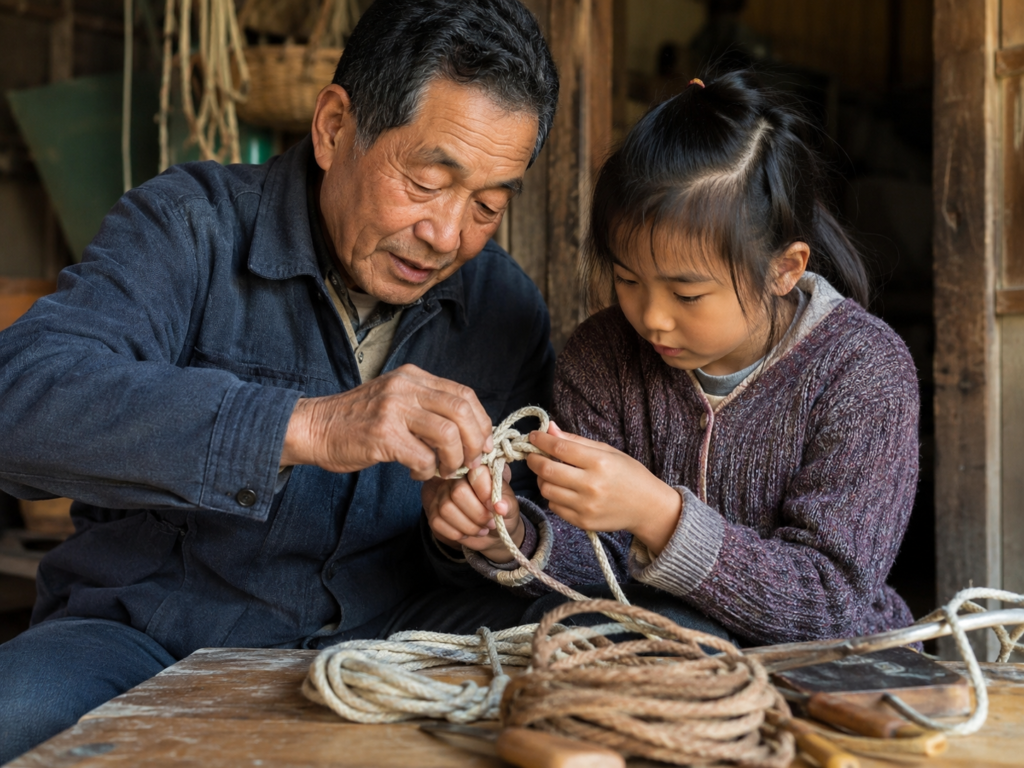
Teaching What You Know
A useful man does not hoard knowledge.
He passes it down.
That does not mean lecturing everyone within reach. It does not mean becoming the old guy who turns every question into a forty-minute autobiography. It means teaching clearly when teaching is needed.
A man should be able to explain a task, demonstrate a skill, correct a mistake, and let the other person practice without humiliating them.
This applies to sons, daughters, younger coworkers, apprentices, nephews, friends, and anyone trying to learn something the man knows.
Good teaching requires patience. It also requires humility. Just because you know how to do something does not mean you know how to teach it.
A useful man notices whether the other person is actually learning or just trying to survive the lecture.
That distinction matters.
This connects naturally to Tenet 12: Strength Without Ego. Strength should make other people stronger, not smaller.
Problem-Solving Under Uncertainty
Life rarely hands men complete information.
A useful man learns how to act without pretending he knows everything. He gathers facts, checks assumptions, identifies risks, asks better questions, separates urgent from important, makes a reasonable decision, and adjusts when new information arrives.
This skill matters everywhere:
- At work
- At home
- With money
- With health
- With family
- With aging parents
- With adult children
- With repairs
- With relationships
- With crisis
A man who needs perfect certainty before acting may freeze. A man who acts without thought may create damage. The useful man works between those failures.
He does not know everything.
He does not pretend to.
He learns enough to make the next responsible move.
Judgment About Risk
Useful men understand risk.
Not in a paranoid way. In a practical way.
They know some risks are worth taking. Some are not. Some require preparation. Some require professional help. Some require walking away. Some require slowing down long enough to avoid making pride expensive.
This matters with tools, money, health, legal documents, driving, conflict, business, and relationships.
A man should know the difference between courage and recklessness.
Courage faces a necessary risk for a worthy reason.
Recklessness creates unnecessary risk because the man wants to feel tough, fast, certain, or untouchable.
That difference gets clearer with age.
Or it should.
Emotional Regulation
A man who cannot regulate himself becomes harder to trust.
People may love him. They may depend on him. They may respect parts of him. But if they never know which version of him will show up under stress, they will start managing him instead of trusting him.
Emotional regulation means a man can feel anger, fear, grief, embarrassment, disappointment, or frustration without immediately handing control to that feeling.
It means he can pause, lower his voice, take a walk, delay the response, choose the right outlet, say enough without dumping everything, and avoid using private pain as public ammunition.
This is not emotional suppression.
It is command.
The older a man gets, the less excuse he has for making everyone else live under the weather system of his mood.
Self-Care Without Self-Obsession
Some men neglect themselves and call it sacrifice.
Other men obsess over themselves and call it growth.
Neither is the goal.
A useful man takes reasonable care of himself so he can keep carrying what matters. He sleeps enough when possible. He eats with some discipline. He keeps medical, dental, and basic health matters from becoming avoidable crises where he can. He maintains his home, tools, documents, body, relationships, and responsibilities.
He does not make self-care his entire personality.
He also does not treat neglect as proof of toughness.
Responsibility includes the man himself.
A burned-out, bitter, deteriorating man may still be trying hard, but he may also be making himself harder to live with, harder to rely on, and less capable over time.
Discernment With Information
The modern world throws information at men constantly.
News. Videos. Podcasts. Influencers. Experts. Fake experts. Outrage merchants. Algorithms. Conspiracy theories. Sales pitches. Half-truths. Real warnings buried under nonsense.
A useful man needs discernment.
He should know how to check sources, slow down before sharing, recognize emotional manipulation, and avoid becoming a courier for every claim that flatters his existing beliefs.
This is not about becoming neutral on everything. It is about refusing to be easily played.
A man who cannot sort information will eventually outsource his thinking to whoever knows how to provoke him best.
That is not independence.
That is manipulation with extra steps.
This is also why Reading for Life, Not Status matters. Reading widely and honestly can help a man build better judgment, not just collect opinions.

Common Mistakes Men Make
The first mistake is confusing usefulness with being needed by everyone. Usefulness does not mean becoming the unpaid emergency service for every irresponsible person in your life. Boundaries still matter.
The second mistake is trying to learn everything at once. That usually fails. Pick one skill. Build momentum. Then pick another.
The third mistake is turning skills into ego. The point of competence is service and independence, not superiority.
The fourth mistake is refusing to learn from people who do not fit your preferred image of a teacher. Useful knowledge may come from a younger person, a woman, a coworker, a stranger, a book, a video, a class, or a mistake you would rather not admit.
The fifth mistake is waiting until crisis. Learn before you are forced to learn under pressure. Pressure is a terrible classroom when pride is already involved.
This is part of the same pattern covered in Why Men Stop Learning: Pride, Comfort, and Fear Disguised as Certainty. Men rarely stop learning all at once. They build excuses until stillness starts looking like wisdom.
A Practical Starting Point
Pick one neglected skill that would make your life better within the next month.
Not someday.
Not in theory.
Within the next month.
Maybe you need to learn how to cook three decent meals. Maybe you need to understand your retirement account. Maybe you need to stop losing passwords. Maybe you need to walk every day. Maybe you need to learn how to repair conflict without defending yourself for twenty minutes first. Maybe you need to understand a tool at work before it makes you obsolete. Maybe you need to learn how to explain something without making the learner feel stupid.
Pick one.
Then make the next step small enough that you have no respectable excuse.
- Ask for help.
- Read the manual.
- Watch the tutorial.
- Take the walk.
- Schedule the appointment.
- Practice the conversation.
- Cook the meal.
- Fix the small thing.
- Write the question down.
Useful men are built through repeated practical movement, not dramatic declarations.
Try It Yourself: Choose one neglected skill and give it thirty minutes this week. Not a life overhaul. Thirty honest minutes. Momentum starts smaller than ego prefers.
The Point Is Not Mastery
You will not master everything.
That is fine.
The point is not to become a flawless, hyper-competent machine who can rebuild an engine, mediate a family dispute, bake bread, understand tax law, write code, split firewood, and emotionally regulate through a tornado before lunch.
That guy does not exist.
And if he says he does, avoid his podcast.
The point is simpler.
Stay teachable. Stay functional. Stay useful.
Know enough to carry your responsibilities with more competence and less drama. Know enough to avoid obvious traps. Know enough to ask better questions. Know enough to help when help is yours to give. Know enough to keep learning when life changes.
A man does not need every skill.
But he does need the humility to see where his gaps are starting to cost him and the discipline to close the ones that matter.
That is how usefulness survives age.
Not through image.
Through maintenance.
Where to Go Next
This page is part of Tenet 11: Lifelong Learning, which is about staying useful, curious, adaptable, and awake as a man gets older.
Continue with:
Humility Is Part of Learning: How Men Admit What They Don’t Know
Learning After 40, 50, or 60: How Men Stay Useful With Age
Why Men Stop Learning: Pride, Comfort, and Fear Disguised as Certainty
Continue Through the 15 Tenets
Back to Tenet 11: Lifelong Learning
All Tenets: 15 Tenets for Positive Masculinity
Next Tenet: Tenet 12: Strength Without Ego