
There are things worth believing strongly.
There are principles worth defending when the room turns against you. There are injustices worth getting angry about. There are political, moral, religious, and cultural arguments where splitting the difference is not wisdom and keeping everybody comfortable is not the highest goal.
Rejecting extremism does not mean becoming harmless.
It means refusing to let conviction rot into fanaticism, grievance become hatred, or loyalty to a cause become permission to stop thinking.
It means understanding that evil does not become less evil because the person committing it shares your skin color, religion, politics, economic class, nationality, or preferred version of history.
And it means recognizing a line that has become dangerously easy to blur:
A political opponent is not automatically an enemy. An enemy is not automatically less human. And believing yourself righteous does not give you a moral blank check.
What Rejecting Extremism Actually Means
Extremism is not the same thing as having a strong opinion.
A man can be deeply conservative without being an extremist. He can be deeply progressive without being an extremist. He can be devoutly religious, firmly secular, fiercely patriotic, angry at government, distrustful of corporations, committed to social justice, passionate about gun rights, serious about immigration enforcement, or convinced that major institutions need radical reform.
None of those positions automatically tells you whether he has surrendered his judgment.
The more useful question is what happens when his beliefs meet people who disagree with him.
Can he still see them as individuals?
Can evidence still change a factual conclusion?
Can he admit wrongdoing by his own side?
Can he distinguish a bad policy from an evil population?
Can he condemn cruelty even when the victim belongs to a group he dislikes?
Can he lose an argument without deciding the person across from him deserves punishment?
Extremism starts becoming visible when those answers turn into no.
Extremism is not conviction.
Conviction gives a man something to stand for. Extremism eventually requires somebody to stand beneath him.
Conviction does not require dehumanization
A man can hold strong beliefs without treating opponents as vermin, celebrating political violence, or surrendering judgment to a tribe.
The Line Is Not Left Versus Right
Politics encourages us to recognize extremism mostly when it arrives wearing the other team’s shirt.
That is convenient. It is also useless.
If white supremacy is wrong, it remains wrong when it helps your preferred political coalition.
If religious persecution is wrong, it remains wrong when the targeted religion makes you uncomfortable.
If racial hatred is wrong, swapping the races does not transform hatred into virtue.
If antisemitism is wrong, a political cause does not cleanse it.
If deliberately degrading gay or transgender people is wrong, invoking tradition does not make degradation noble.
If political intimidation is wrong, the righteousness of your grievance does not make intimidation courageous.
That does not mean history, power, scale, or consequences never matter. They obviously do. A hateful comment from one fool and organized persecution backed by institutions are not equivalent merely because hatred appears in both.
But differences in power do not require us to pretend contempt becomes a virtue when aimed in the approved direction.
A decent moral standard has to survive contact with people you dislike.
Hatred Usually Needs a Story First
Most men do not wake up one morning and decide they would like to spend the rest of their lives hating strangers.
There is usually a story.
Something was taken from you.
Your people are under attack.
The country is being stolen.
The culture is being corrupted.
The economy was designed to keep you down.
The institutions are controlled by people who hate you.
Sometimes pieces of the grievance are real. Governments do fail. Discrimination exists. Institutions lie. People lose jobs. Communities change. Powerful people exploit weaker ones. Cultural changes can be disorienting.
The danger comes when a complicated grievance gets converted into a simple enemy.
That conversion can feel remarkably powerful to a man who feels insignificant, ignored, humiliated, frightened, lonely, or unable to control much of his own life.
Suddenly he has an explanation.
He has a tribe.
He has a mission.
And, most importantly, he has somebody beneath him.
That distortion is developed fully in Why Extremism Feels Like Strength to Men Who Feel Powerless.
Strong Convictions Are Not the Problem
I do not want men afraid to believe anything strongly.
There are already enough people checking the room before deciding what they supposedly believe.
You should be willing to say that something is wrong.
You should be willing to defend someone being mistreated.
You should be willing to oppose your own political side when it violates principles you claimed mattered yesterday.
You should be willing to lose approval rather than repeat something you know is dishonest.
The boundary is not intensity.
It is whether your conviction still allows judgment, evidence, conscience, and moral limits to operate.
A fanatic does not merely believe strongly. His belief has become part of the machinery protecting him from doubt. Contrary evidence becomes propaganda. Questions become disloyalty. Compromise becomes surrender. Criticism becomes persecution. An ally’s wrongdoing becomes strategically inconvenient rather than wrong.
Eventually the cause becomes incapable of failing its own moral test because the cause itself decides what morality means.
Conviction Without Fanaticism: How to Stand Firm Without Losing Perspective deals directly with that distinction.
You Should Be Hardest on Hatred When It Comes From Your Own Side
Anybody can condemn the opposition.
That takes almost no character at all.
The harder moment comes when somebody you normally agree with crosses the line.
Maybe he tells a racist joke and everybody laughs.
Maybe a political speaker says something you would have condemned instantly if the opposing party had said it.
Maybe a religious leader starts explaining why another group deserves fewer rights.
Maybe an activist you respect begins treating cruelty as acceptable because the target belongs to the supposedly powerful class.
Maybe your social circle decides a lie is useful enough to keep repeating.
That is where the principle becomes real.
You do not need to stage a heroic confrontation every time somebody says something stupid. But you should know whether you are remaining silent because the moment does not require your voice or because speaking would cost you membership in the tribe.
Those are not the same thing.
Extremism Needs Dehumanization
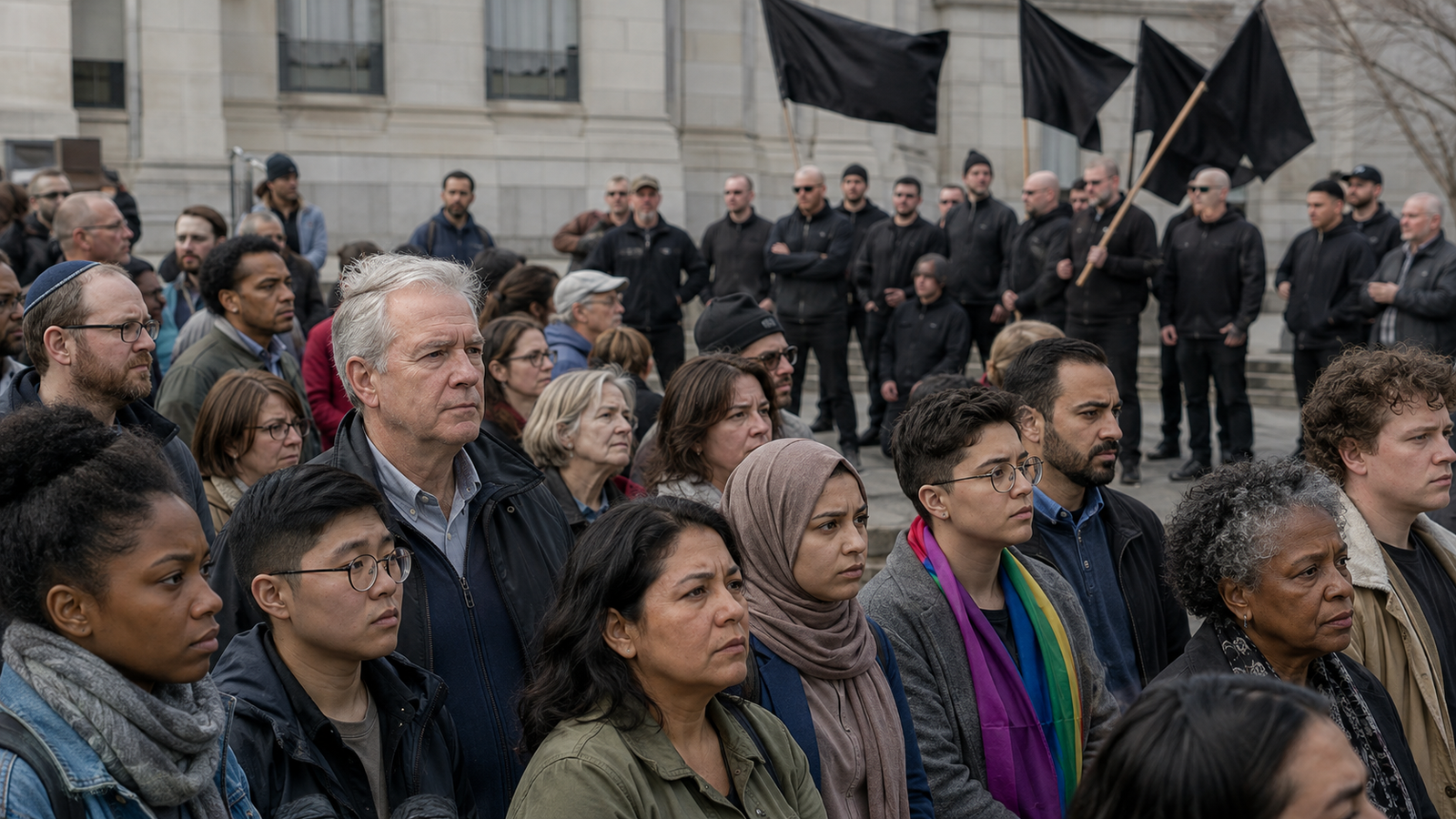
It is difficult to mistreat an individual human being while looking squarely at everything that makes him an individual.
It becomes easier after turning him into a category.
Not Daniel, who teaches third grade and worries about his mother’s health.
A Jew.
Not Marcus, who coaches his daughter’s soccer team and happens to disagree with you about policing.
A Black radical.
Not Hassan, who owns the repair shop down the street.
A Muslim.
Not Miguel, who has lived here twenty years.
An immigrant.
Not the older white guy across town who has a different political sign in his yard.
A fascist.
Not the young progressive woman whose politics drive you crazy.
A communist.
Labels have legitimate uses. Sometimes they describe real ideologies accurately.
The danger comes when the label is used to erase everything else about the person and transfer collective guilt onto him.
Once that happens, cruelty gets easier.
The extremist does not need to prove what this individual did.
Membership in the category becomes enough.
That is the line this Tenet refuses.
Watch the moral line
Reject collective blame, intimidation, fantasies of cleansing violence, and excuses made for your own side. Precision and self-command are part of courage.
Political Violence Is Where the Moral Collapse Becomes Physical
Once a movement has convinced people that its enemies are dangerous enough, corrupt enough, or less human enough, violence begins to sound less like violence.
It becomes resistance.
Defense.
Justice.
Patriotism.
Liberation.
Necessary action.
Whatever word makes the person throwing the punch feel noble.
There are real circumstances where force is necessary to stop an immediate threat. Self-defense is not the same thing as hunting political enemies, terrorizing communities, destroying somebody’s livelihood for symbolism, or wishing for civil war because an election did not go your way.
A cause does not prove its morality by how convinced its members are.
It proves something about itself by what it permits them to do.
Political Violence Is Not Courage takes that boundary to its logical end.
There is nothing masculine about needing innocent people to fear you.
Violence, intimidation, and cruelty do not become courage because a political or religious ideology supplied the excuse.
Rejecting Extremism Does Not Require False Balance
This matters because “both sides” can become another way of refusing to think.
Fairness does not require pretending every situation contains equal wrongdoing distributed neatly across opposing teams.
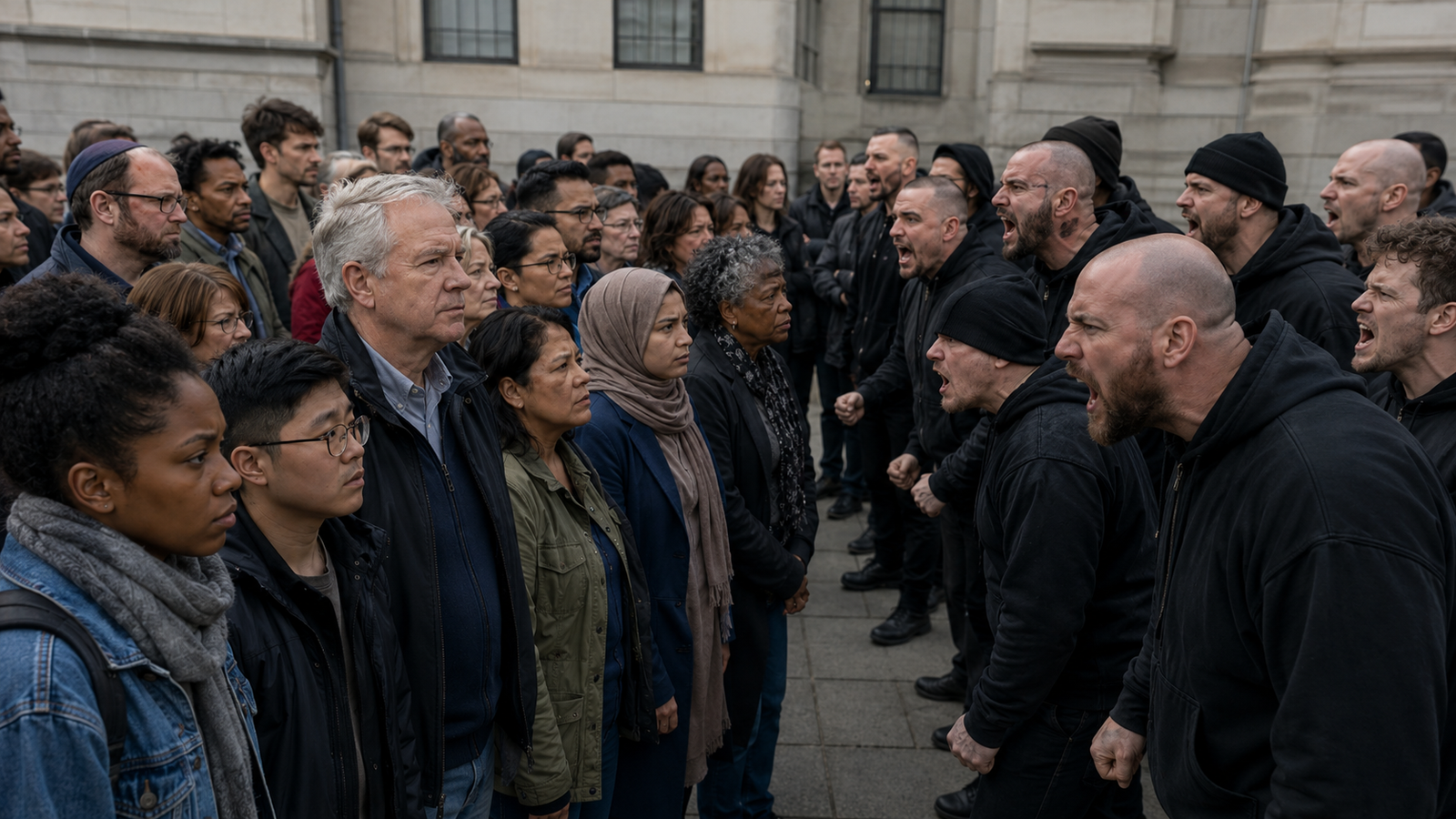
If one group is threatening people and another group is standing there being threatened, the morally sophisticated response is not to complain that everybody should lower the temperature.
If one movement is advocating racial supremacy, you do not owe racial supremacy an ideological counterpart before condemning it.
If somebody is preaching religious hatred, you can oppose what he is doing without first assembling examples of bad behavior by every other religion.
Fairness means using honest standards.
It does not mean refusing to reach a conclusion.
There are times when the correct answer is simply:
No. This is wrong.
But Be Precise About What You Call Extremism
If everything becomes extremism, the word becomes useless.
Do not call somebody an extremist simply because he votes differently.
Do not turn ordinary disagreements over taxes, immigration levels, abortion, guns, policing, environmental regulation, education, health care, foreign policy, religion, sexuality, or government spending into proof that the other person is evil.
Sometimes people disagree because they value different things, weigh risks differently, have different experiences, trust different institutions, or simply reach different conclusions.
A man who cannot distinguish disagreement from hatred is already moving toward the same kind of thinking this Tenet rejects.
Precision makes condemnation stronger, not weaker.
Call racism racism.
Call antisemitism antisemitism.
Call religious persecution what it is.
Call dehumanization what it is.
Call political violence what it is.
And leave enough intellectual discipline to recognize an ordinary disagreement when you see one.
What You Do When the Extremist Is Someone You Love
Condemning strangers is easy.
What happens when the person moving toward hatred is somebody whose phone number you know?
That question requires more than another denunciation.
Sometimes a direct conversation is appropriate.
Sometimes a hard boundary is appropriate.
Sometimes the useful question is not “How could you believe that?” but “Where did this come from?”
Sometimes you need to remind a man that the people he has reduced to categories are actual human beings.
And when extremist rhetoric begins moving toward identifiable threats or violence, the situation stops being a family debate and becomes a safety problem.
How to Confront Extremism in Someone You Know addresses that problem without pretending humiliation, doxxing, shouting, or reckless heroics are useful substitutes for judgment.
Four Ways This Tenet Gets Practiced
1. Keep Your Judgment
If belonging to the group requires you to stop asking questions, something is wrong with the group.
2. Keep One Moral Standard
If an act becomes acceptable only because your side committed it, examine the standard before defending the act.
3. Keep People Human
Judge conduct, beliefs, policies, and institutions as harshly as necessary. Do not turn millions of individuals into one guilty creature.
4. Keep Responsibility for Yourself
Your leader, movement, grievance, religion, party, race, or ideology does not own your conscience. You do.
Freedom Requires a Man Who Can Govern Himself
There is one idea from the older version of this Tenet worth carrying forward.
Freedom and responsibility belong together.
A man who wants freedom for himself while demanding control over everyone he fears has misunderstood freedom.
A man who demands rights while refusing responsibility for his own conduct eventually creates the excuse for somebody else to impose order on him.
Self-government starts smaller than politics.
Can you govern your anger?
Can you govern your appetite for revenge?
Can you resist the emotional satisfaction of believing every bad thing about people you already dislike?
Can you remain responsible for your own behavior when somebody gives you an excuse not to?
That is freedom with some weight behind it.
Reject Extremism Without Becoming Empty
Do not surrender conviction.
Do not surrender anger when anger is appropriate.
Do not surrender the right to call evil by its name.
But do not surrender judgment either.
Do not let a movement tell you that cruelty is proof of commitment.
Do not let a leader become more important than the principles that supposedly justified following him.
Do not let grievance relieve you of responsibility.
Do not let a tribe decide who counts as human.
And do not become so afraid of appearing partisan, impolite, or judgmental that you lose the ability to say something plainly when it needs saying.
Some ideas deserve debate.
Some behavior deserves consequences.
Some hatred deserves a firm no.
The difficult part is retaining enough judgment to know the difference.
That is Tenet 9.
Tenet 9 Support Guides
- Why Extremism Feels Like Strength to Men Who Feel Powerless — why certainty, belonging, grievance, enemies, and borrowed power can become attractive.
- Conviction Without Fanaticism: How to Stand Firm Without Losing Perspective — how to hold strong beliefs without surrendering evidence, humility, or independent judgment.
- Political Violence Is Not Courage — why ideology does not turn intimidation, destruction, or attacks on innocent people into bravery.
- How to Confront Extremism in Someone You Know — practical guidance for challenging hatred without silence, humiliation, reckless escalation, or becoming what you oppose.
Previous Tenet
← Tenet 8: Strength in Compassion
Next Tenet
Tenet 10: Emotional Intelligence →