
Home › 15 Tenets for Positive Masculinity › Tenet 14: Environmental Stewardship
Children learn what adults value by watching what adults maintain.
A lecture about the environment carries less weight when tools are left in the rain, litter is ignored, food is wasted casually, and every broken item is treated as disposable.
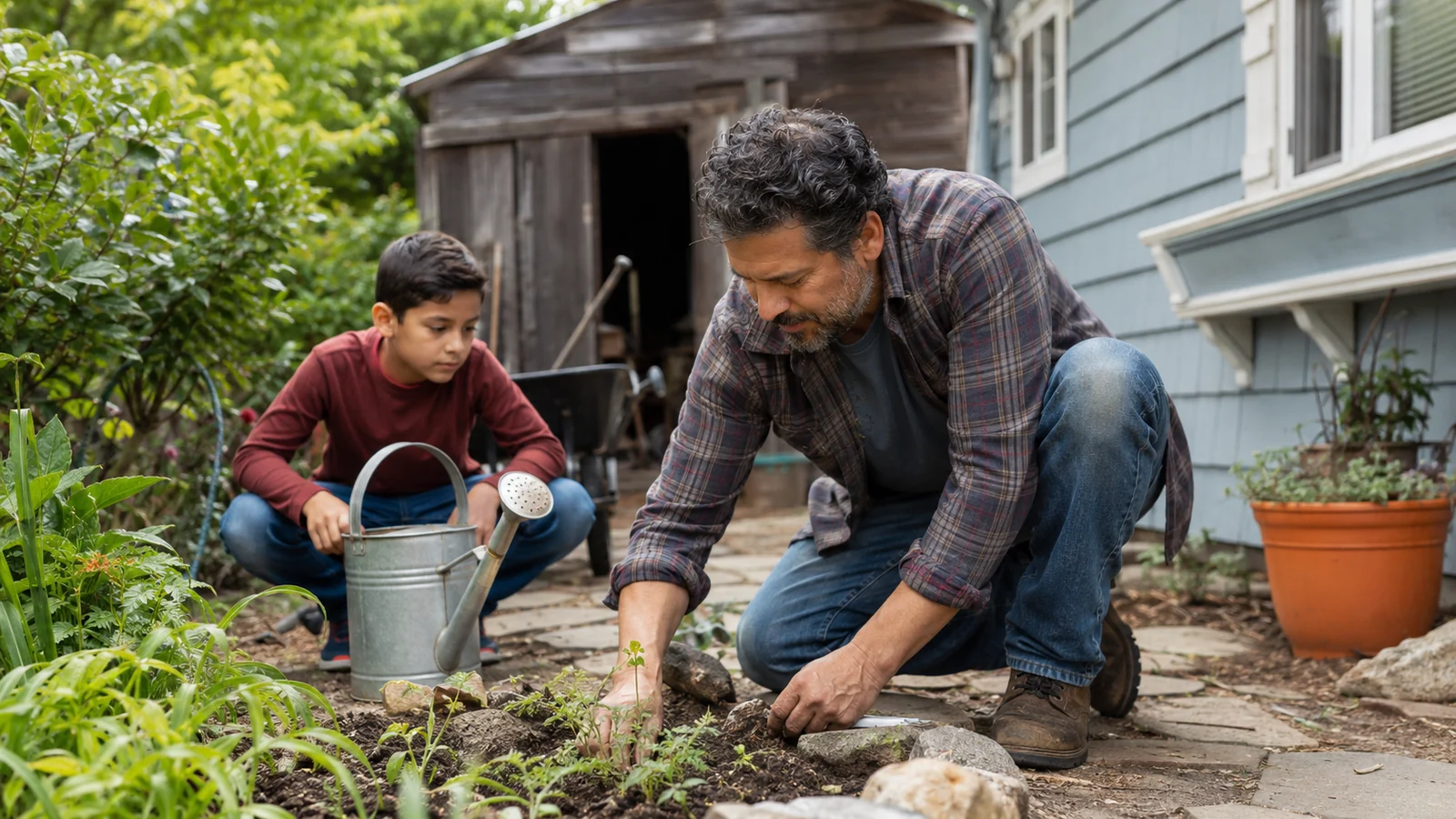
Stewardship becomes believable when younger people participate in the work.
Care is taught through participation
The next generation learns care by sharing responsibility for real places and real resources.
Give Children Work That Actually Matters
Busywork teaches that participation is symbolic. Real tasks communicate trust.
A child can rinse tools, sort usable materials, carry branches, check a garden, refill water, or help clean a shared space according to age and ability.
Explain the Reason Without Preaching
“Put that away” teaches compliance. “Dry the tool so it does not rust” teaches cause and effect.
Brief explanations help young people connect the task to durability, cost, safety, and respect for the next user.
Let Consequences Stay Visible
When something is neglected, involve the child in the repair when appropriate. A bicycle chain needs cleaning. A plant needs recovery. A misplaced item requires searching.
Natural consequences teach more than angry speeches, especially when the adult remains calm and participates.
Care for Shared Places, Not Only Private Property
Parks, trails, sidewalks, waterways, school grounds, and neighborhood spaces belong to everyone and therefore require people who refuse to treat them as nobody’s responsibility.
Working in shared places expands stewardship beyond protecting personal possessions.
Model Imperfection and Correction
Adults forget, waste, and make poor choices. Pretending otherwise teaches children to hide mistakes.
A stronger model says, “We could have handled that better. Here is what we will do differently.” Responsibility includes repair after failure.
A family stewardship rhythm
- Choose one recurring task tied to a real place or resource.
- Match responsibility to age while keeping the task meaningful.
- Explain how maintenance prevents waste and expense.
- Teach safe tool use and return every tool properly.
- Include a shared public place in the family’s care.
- Review what worked without turning the activity into a moral lecture.
The lesson is larger than environmental behavior. A young person who learns stewardship learns that freedom and responsibility belong together.
He or she learns to notice consequences, maintain what others depend on, and leave useful things ready for the next person.
Common Experience and Application
Age-Appropriate Does Not Mean Meaningless
Young children can carry, sort, wipe, water, and return items. Older children can measure, plan, use hand tools under supervision, research disposal rules, and take responsibility for recurring maintenance.
Increase responsibility as competence grows. A child who is never trusted with real work does not magically become a responsible adult at eighteen.
Teach Tools With Patience and Safety
Tools communicate that the physical world can be understood and cared for. They also require instruction, protective equipment, and respect for limits.
Demonstrate the task, explain the hazard, watch the child attempt it, and correct without ridicule. Competence grows faster when mistakes become information rather than shame.
Connect Care to Other People
A maintained trail serves the next walker. A clean shared tool respects the next user. Donated clothing should be usable, not merely removed from the house.
Stewardship becomes moral when children see who benefits from care and who bears the cost of neglect.
Let Traditions Carry the Habit
Seasonal garden work, an annual neighborhood cleanup, preparing equipment for winter, or repairing bicycles each spring can become part of family identity.
Traditions reduce the need to manufacture motivation. The work arrives because the season and the family rhythm say it is time.
Responsibility Should Grow With Competence
Children need work that is safe enough to learn and real enough to matter. Giving them only symbolic tasks teaches that stewardship is adult work decorated with child participation. Giving them work beyond their judgment creates frustration and risk.
The responsibility should expand in steps. A young child can sort, carry, water, wipe, and return tools. An older child can measure, research, inspect, perform basic maintenance, and take ownership of a recurring task under appropriate supervision.
Adults should explain what success looks like, demonstrate once, observe the attempt, and correct without taking over at the first imperfect movement. Patience is part of passing on competence.
Match the lesson to the stage
- Early childhood: notice waste, return objects, care for plants, and participate beside an adult.
- Middle childhood: follow a maintenance sequence, use simple tools safely, and understand why storage and cleanup matter.
- Teen years: plan work, compare repair and replacement, research local disposal, and take responsibility for equipment they use.
- Young adulthood: manage costs, schedules, tradeoffs, and the consequences of neglect without waiting for rescue.
Teach the Social Meaning of Care
Stewardship is not only about objects. A maintained tool is ready for the next user. A clean campsite respects the next family. A cleared drain protects nearby homes. A repaired bicycle can restore another person’s transportation.
Young people understand responsibility more deeply when they can see who benefits. Connect the task to neighbors, family members, workers, wildlife, and people who will use the place after them.
This also prevents environmental care from becoming self-congratulation. The work matters because consequences are shared, not because the family earns an identity for doing it.
Real-World Situations
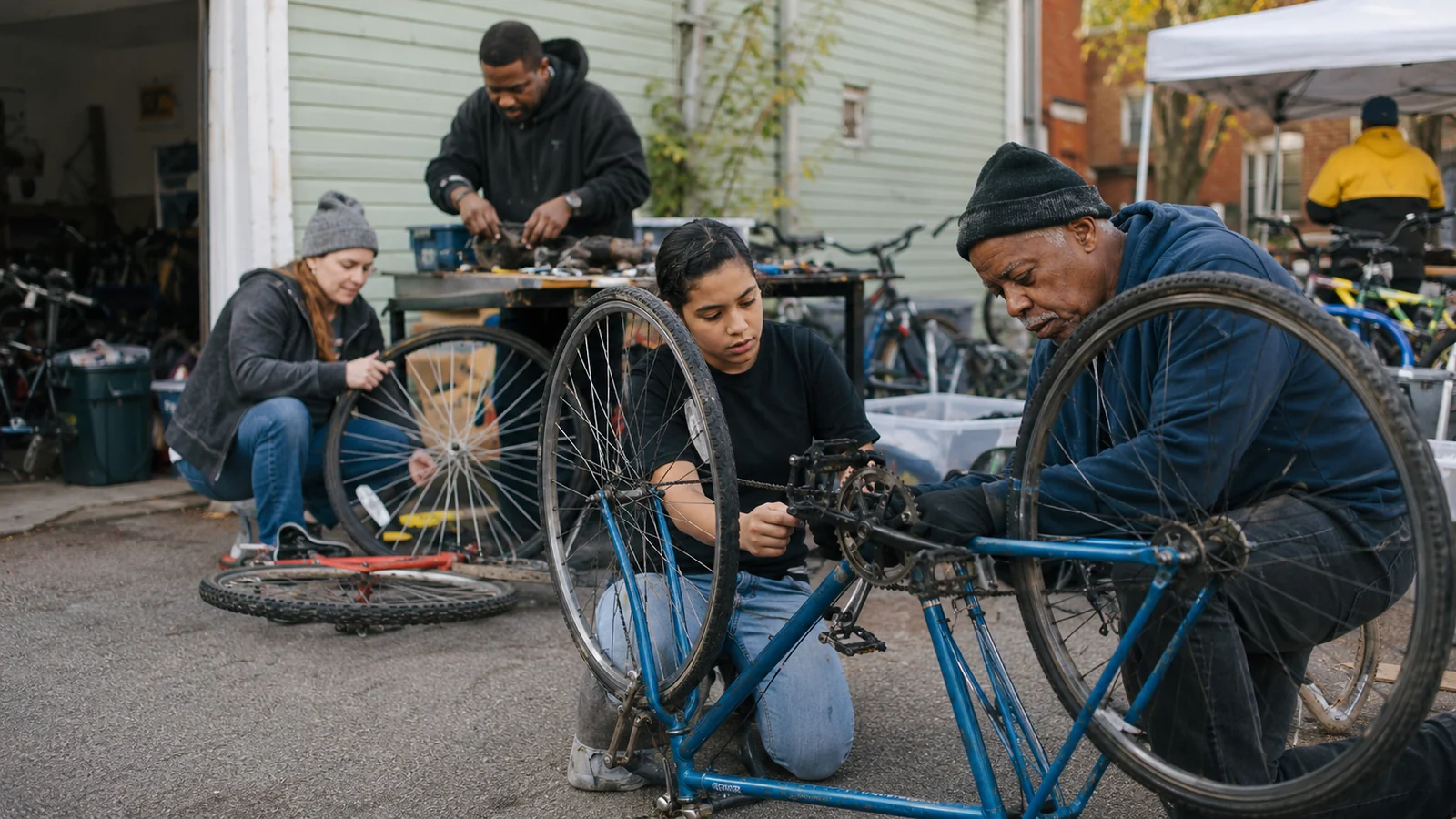
Maintaining a bicycle together
A young person can learn air pressure, cleaning, lubrication, safe braking, and tool return. The work connects freedom—the ability to ride—with responsibility for keeping equipment safe.
Do not seize the task at the first mistake. Slow down, demonstrate again, and let competence develop.
Caring for a neighborhood space
A family can adopt a short walking route, creek edge, or shared corner for periodic litter collection and observation. The repeated visit makes environmental change visible.
Children begin to notice drainage, plant growth, damage, and the effects of other people’s choices without needing a lecture.
Preparing for a season
Winterizing outdoor equipment, storing garden tools, checking weather seals, or preparing summer gear turns maintenance into a predictable family rhythm.
Seasonal work teaches anticipation: care happens before failure, not only after something breaks.
Give the next generation real work, patient instruction, and visible reasons to care. Stewardship becomes durable when it feels like part of belonging.
Part of Tenet 14: Environmental Stewardship. Previous: Environmental Responsibility Without Purity Tests. Next: Tenet 14: Environmental Stewardship.